Blog Topic: Fertility testing

  • How Many Eggs to Freeze: A Guide Using Egg Freezing Calculators

    How Many Eggs to Freeze: A Guide Using Egg Freezing Calculators


    Blog
    Egg freezing

    How Many Eggs to Freeze: A Guide Using Egg Freezing Calculators

    Understanding how many eggs you should freeze in one cycle, egg freezing calculators, and how many eggs are enough for one baby

    How Many Eggs to Freeze: A Guide Using Egg Freezing Calculators

    Understanding how many eggs you should freeze in one cycle, egg freezing calculators, and how many eggs are enough for one baby 

    Introduction

    Egg freezing has become a popular option for women who wish to preserve their fertility. One of the most pressing questions in this process is: How many eggs should you freeze? The answer to this question depends on various factors such as age, health, and personal goals. In this article, we will discuss how to calculate the number of eggs to freeze and factors to consider when determining the ideal number of eggs to freeze.

    From frozen eggs to a healthy embryo 

    Overall, the most important thing to keep in mind is that the number of eggs retrieved is not equal to the number of babies born. To better understand why you need more eggs to get to a pregnancy, it is worth looking into the egg freezing and IVF process overall.

    Egg retrieval

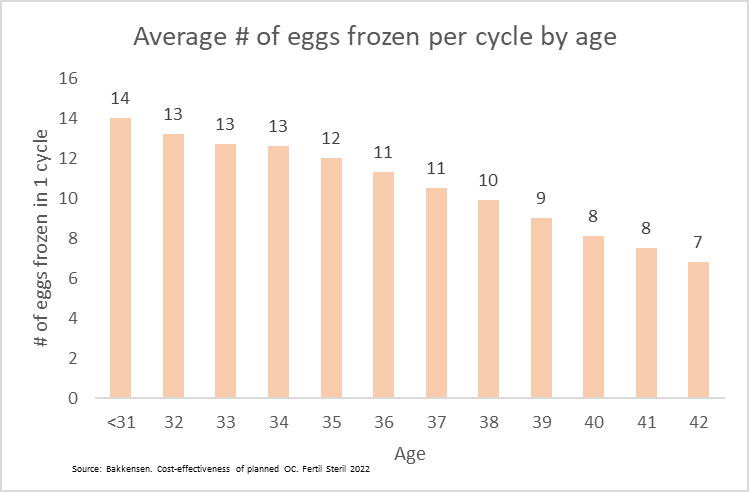
    Not all of the eggs that will be retrieved will be mature, and only mature eggs will be frozen. At your first appointment, when your fertility doctor evaluates your ovarian reserve and does the fertility testing, they would be able to say how many eggs they expect to retrieve. That number will depend on the number of follicles tin your ovaries, your testing results and age, as well as a medication protocol that is used.

    Below is the average number of eggs frozen depending on your age:
  • Unlocking the Potential of Folic Acid for Fertility

    Unlocking the Potential of Folic Acid for Fertility


    Blog
    IVF

    Unlocking the Potential of Folic Acid for Fertility

    Does folic acid increase fertility? Learn about folic acid's effect on female and male fertility and its role in IVF.

    Unlocking the Potential of Folic Acid for Fertility

    Nutrition and proper diet have an important role in the appropriate functioning of the reproductive system. One nutrient that has gained attention in recent years for its potential role in improving fertility is folic acid. In this blog post, we will explore the connection between folic acid and fertility and whether this simple vitamin can truly boost your chances of conception.

    Understanding Folic Acid:

    Folic acid, also known as vitamin B9, is a water-soluble B vitamin that is crucial for various bodily functions. It is especially well-known for its role in preventing birth defects and supporting a healthy pregnancy. Folic acid plays a vital role in DNA synthesis, repair, and cell division, which are essential processes for a healthy pregnancy.

    Folic Acid for Women:

    For women, taking folic acid is essential even before pregnancy is planned. There is a large volume of scientific evidence dating back to the 1980s showing that folic acid helps prevent neural tube defects in the developing fetus. Folic acid was recommended as an essential supplementation for women wanting to conceive. However, the benefits of folic acid extend to fertility as well. A few recent studies demonstrated that higher supplemental folate intake (800 mg/daily) was associated with modestly higher ovarian reserve. Based on a different study, a diet with a higher intake of folic acid was also associated with a lower risk of anovulation.

    Folic Acid for Men:

    While there is an opinion that zinc supplementation, together with folic acid, holds potential advantages for men trying to father a child through improved sperm quality, including motility and DNA integrity, the largest randomized studies do not support this evidence. The randomized study of 2,340 men showed no difference in the quality of sperm between men taking supplements and placebo. The same results were received in the most recent study of 1,470 men.

  • Preparing for a successful IVF and boosting fertility

    Preparing for a successful IVF and boosting fertility


    Blog
    IVF

    Preparing for a successful IVF and boosting fertility

    Discover essential tips and tricks for successful IVF preparation, and prepare your body and mind. Consider a second opinion and more fertility testing.

    Preparing for a successful IVF and boosting fertility

    When facing the challenging journey of infertility, exploring all options and ensuring you’re fully prepared can make a significant difference in your fertility treatment’s success. One crucial aspect is seeking a second opinion to confirm your treatment plan and find peace of mind. In this article, we’ll delve into why a second opinion is essential and outline the extensive testing required to understand the core reasons for infertility diagnoses. We’ll also cover various steps to prepare your body for IVF (In Vitro Fertilization) success, including lifestyle changes, hormonal balance, and mental well-being.

    Why a Second Opinion with a Fertility Doctor Matters

    Confirming Your Fertility Treatment Plan: 

    Seeking a second opinion before embarking on your fertility journey can provide confirmation that your chosen treatment plan is the most suitable option for your specific situation. It helps ensure you’re on the right path.

    Peace of Mind: 

    Infertility can be emotionally taxing, and doubts may arise along the way. A second opinion offers peace of mind, reducing uncertainties and bolstering your confidence in your chosen treatment.

    Checklist for Fertility Testing

    To determine the root causes of infertility, comprehensive testing is crucial. Here are the key tests:

  • Fertility testing for women

    Fertility testing for women


    Blog
    Fertility testing

    Fertility testing for women

    Learn about fertility tests for women, when and how to test fertility, and different diagnostics fertility tests for women.

    Fertility testing for women

    By Constance McGraw, MPH

    What is fertility testing for women?

    Fertility testing for women refers to a series of diagnostic evaluations and assessments that are conducted to understand and evaluate a woman’s reproductive health and their ability to conceive a child. 

    What is included in fertility testing for women?

    • A discussion of medical history, frequently to assess any issues with ovulation or menstrual cycle
    • Blood tests to check hormone levels and ovarian reserve (the number of potential eggs remaining in a woman’s ovaries).
    •  Pelvic examination
    •  Minimally invasive procedures, such as ultrasound imaging (sonogram), X-rays, and surgery, to check for structural causes of infertility

    Who should consider fertility testing?

    Women under the age of 35 who have been engaging in regular, unprotected intercourse with their partners for a year should consider fertility testing. For women aged 35 or older, this assessment is recommended after 6 months of trying to get pregnant.

    Moreover, specific conditions and circumstances may prompt the need for fertility testing, including:

    • Those diagnosed with reproductive system issues involving the fallopian tubes, ovaries, or uterus.
    •  Individuals experiencing irregular menstruation (with more than 35 days between periods), heavy bleeding, or absent periods.
    • Women with a history of recurrent miscarriages.
    • Women who have a background of pelvic inflammatory disease, pelvic pain, or endometriosis.
    • Partners with suspected or identified male infertility.
  • A Guide to Understanding Hysteroscopy

    A Guide to Understanding Hysteroscopy


    Blog
    IVF

    A Guide to Understanding Hysteroscopy

    Learn what a hysteroscopy is and how hysteroscopy is used for IVF and infertility diagnostics.

    A Guide to Understanding Hysteroscopy

    By Constance McGraw, MPH

    What is a hysteroscopy?

    Hysteroscopy is a medical procedure that helps healthcare providers examine a woman’s uterus using a thin, illuminated tube called a hysteroscope. Hysteroscopy is the preferred procedure for both diagnosing (diagnostic hysteroscopy) and treating (operative hysteroscopy) uterine issues.

    When and why hysteroscopies are performed

    Hysteroscopies are typically performed for the following reasons:

    • To determine reasons for infertility
    • To determine the cause of recurrent miscarriages
    • To determine the causes of abnormal uterine bleeding
    • To locate an intrauterine device (IUD)
    • To treat pelvic pain
    • To remove adhesions from previous surgery or infections
    • To place small implants into a woman’s fallopian tubes as a permanent form of birth control (sterilization)
    • To treat bleeding after menopause

    The hysteroscopy procedure 

    • Hysteroscopy takes place in a healthcare office or hospital when you’re not on your period.
    • Prior to a hysteroscopy, you might receive medication to relax or anesthesia to put you to sleep.
    • To ease the procedure, your cervix might be opened (dilated) using medication or special tools. 
    • A speculum goes into the vagina, followed by a hysteroscope inserted through the cervix into the uterus. 
    • Carbon dioxide or saline is used to expand the uterus for a clearer view. The fluid amount is monitored. 
    • Your healthcare provider uses the hysteroscope to view your uterus lining and fallopian tube openings. If needed, small tools can be inserted for a biopsy or other procedures.
    • If adhesions are removed, dilation and curettage will occur, where your doctor uses a curved tool called a curette to gently scrape tissue from your uterus.

    Hysteroscopy is generally performed as an outpatient procedure, and you should be able to go home afterward; however, if you received general anesthesia, you may need to wait until you are less groggy to return home.

  • All things ovulation

    All things ovulation


    Blog
    Fertility testing

    All things ovulation

    Ovulation tests, ovulation strips vs digital trackers, tips on how to make testing accurate, PCOS and ovulation,

    All things ovulation

    By Constance McGraw, MPH

    What is Ovulation?

    Ovulation is the release of a single mature egg from the ovaries and is pertinent for getting pregnant. This typically occurs 36-40 hours after a surge in luteinizing hormone (LH). The released egg travels through the fallopian tube, remaining viable for just 12-24 hours unless fertilized by sperm.

    To enhance your chances of conception, tracking your menstrual cycle, along with observing ovulation signs like cervical mucus and utilizing ovulation tests, can help pinpoint the optimal time for intercourse. If you need help of a fertility specialist, book a consultation with one near you.

  • Exploring Laparoscopy in Fertility Diagnostics

    Exploring Laparoscopy in Fertility Diagnostics


    Blog
    IVF

    Exploring Laparoscopy in Fertility Diagnostics

    Learn what is laparoscopy procedure and how it is used for endometriosis and IVF diagnostics

    Exploring Laparoscopy in Fertility Diagnostics

    By Constance McGraw, MPH

    What is laparoscopy?

    Laparoscopy is a minimally invasive procedure using a small camera (laparoscope) and several small incisions to examine the abdomen and reproductive organs, avoiding the need for a large incision. Laparoscopy is considered a safe procedure and is used to help diagnose medical conditions and take biopsies of tissues. Gynecologists and obstetricians routinely use laparoscopy to diagnose (diagnostic or exploratory laparoscopy) and address (operative laparoscopy) issues contributing to infertility.

    Laparoscopy for infertility

    Laparoscopy for infertility becomes a viable option when other fertility tests fail to yield a conclusive diagnosis. Additionally, it is recommended for cases of unexplained infertility or when women experience pelvic or abdominal pain or have a pelvic mass. Notably, any identified issues can often be addressed during the same laparoscopy procedure. Laparoscopy can also be used to diagnose and treat the following medical conditions:

    • Endometriosis
    • Tubal sterilization 
    • Pelvic floor disorders
    • Ovarian cysts
    • Ectopic pregnancies
    • Fibroids
    • Cancer 

    Laparoscopy procedure 

    Laparoscopy is routinely an outpatient procedure with the following steps:

    1. Anesthesia is typically administered for comfort during the procedure.
    2. A small incision near the belly button or lower abdomen is made to introduce the laparoscope, a tool equipped with a camera for visualizing the internal organs.
    3. The abdomen is filled with a harmless gas to gain a better viewing of your abdomen and pelvic organs.
    4. Images of the pelvic organs are transmitted to a screen via the camera. Occasionally, additional incisions are made for specialized tools.
    5. An instrument called a uterine manipulator may be inserted through the vagina and cervix into the uterus to move the organs into view.
    6. The surgeon employs other instruments through small incisions, typically no longer than half an inch if treatment is needed.
  • IVF cost in Florida

    IVF cost in Florida


    Blog
    Clinics

    IVF cost in Florida

    The average cost of IVF in Florida can vary from $7,900 to 30,000 per IVF cycle. In this blog, we will explore what factors influence the price, insurance coverage, and ways to save money on IVF in the Sunshine State.

    IVF cost in Florida

    Find a fertility clinic under your budget

    Understanding IVF

    In Vitro Fertilization, commonly known as IVF, is a medical procedure in which an egg and sperm are combined outside the body in a laboratory setting. Once the embryos develop, they are then transferred into the uterus, with the goal of achieving a successful pregnancy.

    IVF Cost Factors in Florida

    Several factors can influence the cost of IVF in Florida, making it important for prospective parents to understand these variables:

    • Clinic Choice: The choice of IVF clinic plays a crucial role in determining the cost. Florida boasts a variety of clinics, each with its own pricing structure and services.
    • Additional Services: The cost of IVF may include additional services such as medication, embryo testing (PGT-A), and cryopreservation of embryos or eggs.
    • Geographic Location: The cost of living can vary significantly in different regions of Florida, and this can impact IVF prices. For instance, clinics in major cities like Miami or Orlando may charge more than those in smaller towns. Compare prices for IVF in Miami, Margate, Boca Raton, Jupites and other cities in Florida and in the US.
    • Health Insurance: Some health insurance plans may partially cover the cost of IVF in Florida, so it’s essential to check with your provider about potential coverage.

    How Much Does IVF Cost in Florida?

    On average, the cost of a single IVF cycle in Florida can range from $7,900 to $30,000. However, it’s crucial to understand that more than one cycle may be needed to get to pregnancy, and the final bill will depend on the individual circumstances, cycles required, and the use of any additional services like genetic testing or ICSI (intracytoplasmic semen injection). Find best IVF clinics in Florida under your budget.

    Breaking Down IVF Costs

    • Fertility Assessment and Testing: The initial consultation and fertility testing are often separate costs from the IVF cycle itself. This may include blood tests, ultrasounds, and other diagnostic procedures.
    • Medication: IVF often requires fertility medications to stimulate egg production. Medication costs can be anything from $3,000 to 10,000. 
    • Procedure Costs: This includes the actual IVF procedure, which covers egg retrieval, fertilization, and embryo transfer. Additional Services: If you opt for additional services like embryo testing or cryopreservation, these will incur extra charges. Ask your clinic what is included in your cycle, as sometimes the clinic can bill you separately for things like anesthesia or even monitoring.
    • Follow-Up Appointments: After the IVF cycle, you may need follow-up appointments and monitoring, which can add to the overall cost.
  • Understanding Hysterosalpingography (HSG)

    Understanding Hysterosalpingography (HSG)


    Blog
    Fertility testing

    Understanding Hysterosalpingography (HSG)

    Learn about the HSG procedure, HSG test costs, its benefits and side effects, and the difference between sonohysterography vs. HSG

    Understanding Hysterosalpingography (HSG)

    By Constance McGraw, MPH

    What is the HSG test?

    A hysterosalpingogram, or HSG test, is a minor X-ray procedure used to view the inside of the uterus and fallopian tubes and can also indicate if the uterus is of normal shape and size. It is often used as a routine part of an infertility workup to see if the fallopian tubes are partly or fully blocked.

    HSG Test for Infertility 

    HSGs are often a routine part of infertility workups. An HSG test uses X-rays and a special dye to find issues like scar tissue, polyps, fibroids, or growths that might block your tubes or stop a fertilized egg from implanting in your uterus. Blocked tubes or growths can make it harder to get pregnant. If your tubes are blocked, sperm can’t reach the egg. HSG may also be used following some tubal sterilization procedures to make sure that the fallopian tubes have been completely blocked or to examine reasons for recurring early pregnancy loss.

    Benefits of HSG

    The HSG test not only identifies blockages and growths but also has been suggested to improve fertility within 3-6 months through “tubal flushing.” Tubal flushing involves injecting dye into the uterus and fallopian tubes without an X-ray. Research indicates higher pregnancy and live birth rates when using an oil-based dye compared to water-based solutions. However, a Cochrane review on the efficacy of tubal flushing and fertility found that the studies identified were of poor quality and more robust research is needed to better understand comparing oil‐soluble versus water‐soluble media or no treatment on improving pregnancy rates post HSG test.

  • Sonohysterography and its role in fertility testing

    Sonohysterography and its role in fertility testing


    Blog
    Fertility testing

    Sonohysterography and its role in fertility testing

    Learn what sonohysterography is and compare sonohysterography vs hsg, hysteroscopy, and other ultrasound procedures.

    Sonohysterography and its role in fertility testing

    By Constance McGraw, MPH

    Sonohysterography procedure

    Sonohysterography (SHG), also referred to as saline infusion sonography (SIS), is a safe and relatively painless ultrasound procedure used as an initial screening method to identify potential issues related to the uterus and ovaries. Lasting no longer 30 minutes, the SHG involves inserting a transducer wand into the vagina and cervix, delivering fluid into the uterus. Simultaneously, sound waves transmitted through gel create a real-time image of the uterus’s interior. The saline solution enhances the ultrasound, offering clearer details of the uterus’s structure compared to traditional ultrasounds. 

    Saline infusion sonohysterography indication

    Healthcare practitioners use sonohysterography to help diagnose a number of medical conditions related to infertility. If a patient experiences abnormal uterine bleeding, infertility, repeated miscarriages, or an abnormal pelvic exam, SHG is frequently recommended to determine if there may be additional contributing factors at play, including:

    • Uterine fibroids
    • Uterine polyps
    • Scarring inside the uterus
    • Abnormal shape of the uterus
    • Uterine cancer