Blog Topic: IVF

  • The egg retrieval procedure

    The egg retrieval procedure


    Blog
    Clinics

    The egg retrieval procedure

    The egg retrieval is a step in IVF, egg freezing, and embryo freezing. It may have mild side effects, but most individuals recover within a few days.

    The egg retrieval procedure

    The egg retrieval procedure is a critical step in in vitro fertilization (IVF), egg freezing, or embryo freezing. Here’s an overview of the procedure:

    Purpose

      – IVF: To retrieve mature eggs from a woman’s ovaries for fertilization in a lab.

      – Egg Freezing: To collect and freeze a woman’s eggs for future use.

      – Embryo Freezing: To harvest eggs, fertilize them, and freeze resulting embryos for later use.

    Egg retrieval procedure

      – Typically performed within 15 minutes under light anesthesia or sedation.

      – A thin, hollow needle is inserted through the vaginal wall into the ovaries.

      – The needle is guided by ultrasound imaging to aspirate mature eggs from follicles.

      – Collected eggs are then immediately transferred to a laboratory for further processing.

    Side effects of egg retrieval

      – Common side effects include mild discomfort, bloating, and cramping.

      – Rarely, there can be infection, bleeding, or damage to nearby organs, but these are very uncommon.

    Recovery

      – Most women can resume normal activities within 24 to 48 hours.

      – Mild discomfort and bloating may persist for a few days.

      – Strictly follow your doctor’s post-retrieval instructions.

    After egg retrieval

      – IVF: After retrieval, eggs are fertilized with sperm, and embryos develop over several days. Some embryos can be frozen if not used in the first implantation.

      – Egg Freezing: Eggs are frozen and stored for future use indefinitely.

      – Embryo Freezing: Embryos are frozen and stored, ready for transfer in a future IVF cycle.

    Egg or embryo storage can be a big additional cost. We’ve done the research and found a reliable egg/embryo storage facility for $375 a year (on a 5-year plan). Reach out if you want to save money at a reliable cryobank.

    In summary, the egg retrieval procedure is a pivotal step in assisted reproductive technologies like IVF, egg freezing, and embryo freezing. While it may have mild side effects, most individuals recover within a few days, and the timeline varies depending on the specific purpose of the procedure. If you want to get a full scoop of our fertility support, book a consultation. Or find an affordable fertility clinic for a consultation or second opinion.
  • ICSI in IVF: what do you need to know

    ICSI in IVF: what do you need to know


    Blog
    Clinics

    ICSI in IVF: what do you need to know

    What is ICSI in IVF, when is it used, ICSI vs. conventional IVF, the effect of ICSI on IVF success rates, and more

    ICSI in IVF: what do you need to know

    Introduction

    In the world of fertility treatments, the acronym ICSI is commonly used when speaking about IVF, leaving many people confused about what it means. In this blog, we’ll explore the concepts of ICSI and IVF, delve into the differences between ICSI vs conventional IVF, discuss success rates, costs, and much more. Whether you’re considering this treatment or simply curious about assisted reproduction, this guide will provide you with valuable insights.

    Understanding ICSI and IVF

    IVF (In Vitro Fertilization)

    IVF, or In Vitro Fertilization, is a widely recognized and common fertility treatment. It involves stimulating a woman’s ovaries to produce multiple eggs, retrieving those eggs, fertilizing them with sperm outside the body, and then transferring the resulting embryos back into the woman’s uterus. IVF is often recommended when couples face infertility due to various factors, such as blocked fallopian tubes, male infertility issues, or unexplained fertility problems.

    ICSI (Intracytoplasmic Sperm Injection)

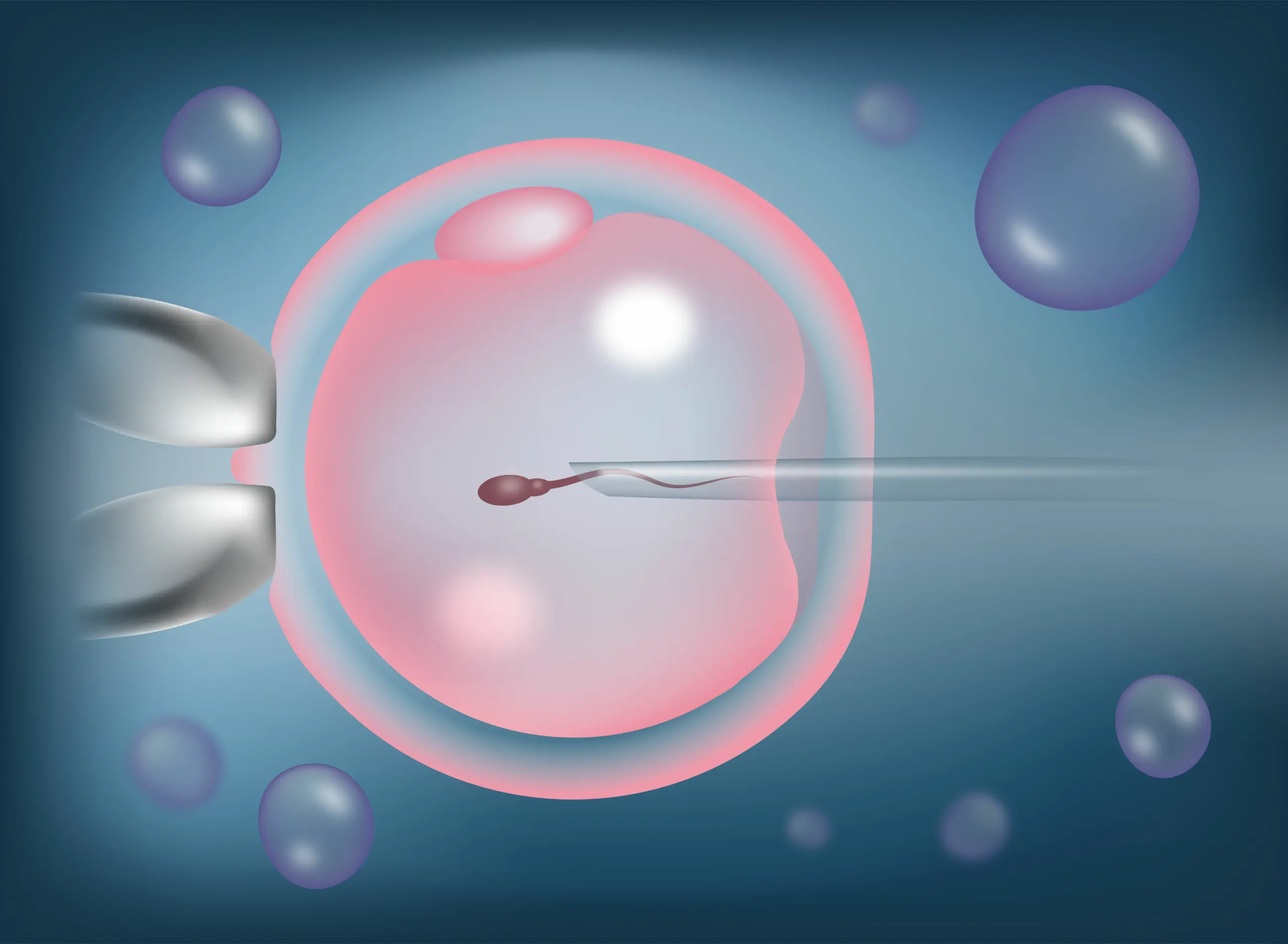
    ICSI, short for Intracytoplasmic Sperm Injection, is a specialized technique used within the framework of IVF. In ICSI, a single sperm is selected and directly injected into an egg to facilitate fertilization. This method is particularly beneficial when there are male infertility issues, such as low sperm count, poor sperm motility, or abnormal sperm shape.

    ICSI vs. IVF

    Now, let’s delve into the differences between ICSI and conventional IVF:

    Fertilization Process: The primary distinction lies in the fertilization process. In IVF, sperm and eggs are combined in a dish, and natural fertilization occurs. In contrast, ICSI involves the direct injection of a single sperm into an egg, ensuring fertilization even when sperm quality is compromised.

    When to use ICSI 

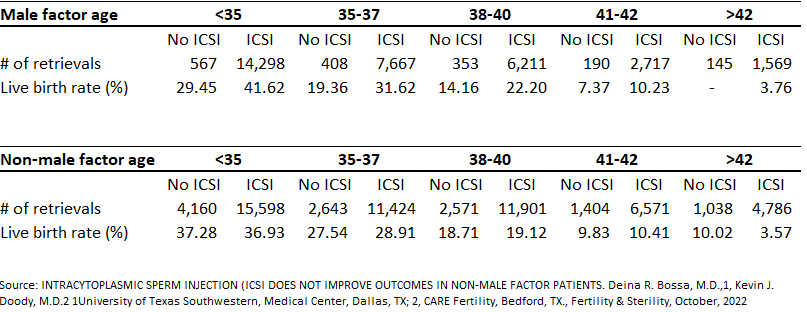
    ICSI is primarily used in IVF cycles for couples with male infertility. There is no strong evidence that demonstrates an increase in live births when ICSI is used without the present male factor, which is also supported by official ASRM (American Society For Reproductive Medicine) guidelines

    ICSI IVF Success Rates

    Success rates for both ICSI and IVF can vary widely depending on several factors, including the age of the woman, the underlying causes of infertility, and the clinic’s expertise. Generally, ICSI may yield higher success rates when male infertility is a contributing factor, as it ensures fertilization. The recent study based on 2020 success rates published by SART (Society for Assisted Reproductive Technology) shows that ICSI brings a significant increase in live-birth rates for patients with male infertility, but there is no statistically significant increase in success rates for patients without male factor infertility:

    Multiple studies show that ICSI has no benefits without male factor infertility.

    ICSI IVF Cost

    The cost of ICSI IVF can be higher than that of conventional IVF due to the additional labor and expertise required for the ICSI procedure. The average price of ICSI is around $600-3,000, so before you add this to your bill – it is important to evaluate potential benefits versus costs. 

    Conclusion

    In summary, ICSI is a specialized technique within the IVF framework. The choice between the ICS vs Conventional IVF depends on the specific circumstances and factors contributing to infertility. Generally, ICSI has proven to be an effective technique used in case of male infertility. It’s crucial to consult with a reproductive specialist who can evaluate your situation and recommend the most suitable approach. You can find fertility specialists near you using our extensive database.

  • Is IVF Painful? Exploring the Side Effects and Risks

    Is IVF Painful? Exploring the Side Effects and Risks


    Blog
    Egg freezing

    Is IVF Painful? Exploring the Side Effects and Risks

    Learn about IVF side effects, IVF risks such as OHSS, and what to expect from each stage

    Is IVF Painful? Exploring the Side Effects and Risks

    Understanding IVF

    IVF is a complex and multifaceted fertility treatment involving several steps. The IVF process typically includes ovarian stimulation, egg retrieval, fertilization, embryo culture, and embryo transfer. While the primary goal of IVF is to help individuals or couples achieve pregnancy, it’s important to acknowledge that it may not always result in success. Moreover, IVF is not entirely without discomfort or side effects.

    Is IVF Painful?

    The degree of discomfort and pain experienced during IVF can vary from person to person. Let’s break down the potential sources of discomfort during each stage of IVF.

    Ovarian Stimulation: 

    Are injections painful?

    The first phase of IVF often involves administering injections to stimulate the ovaries to produce multiple eggs. This process can lead to bloating, nausea, mild abdominal discomfort, and breast tenderness. Also, hormones can make you more emotional and lead to mood swings. Some women may find these sensations uncomfortable, but they are generally manageable. If you are afraid of injections, we can help you find a nurse to administer your shots. Learn about our fertility support.

    Side effects of ovarian stimulation:

    Ovarian hyperstimulation syndrome (OHSS) is a potential complication of ovarian stimulation. OHSS in IVF usually has mild symptoms such as nausea, bloating, and abdominal discomfort that go away in 1 or 2 days without treatment. Severe forms of OHSS that are less common may lead to enlarged ovaries and fluid accumulation in the abdomen, associated with trouble breathing, severe abdominal pain, and dehydration. Your doctor monitors your condition every few days to make sure the complications won’t develop. In very rare cases (less than 1%), OHSS may lead to blood clots and kidney failure.

    Egg Retrieval

    Is egg retrieval painful?

    The egg retrieval procedure is performed under anesthesia, typically intravenous (IV) sedation or local anesthesia. While you shouldn’t feel pain during the procedure itself, you may experience some mild cramping or discomfort afterward, which can last for a day or two. Some women feel emotional and bloated for a longer period of up to 7 days.

    Side effects of egg retrieval:

    Sometimes, mild pelvic infection can occur, which is easily treated with antibiotics and very rarely requires severe infection develops that may need additional intervention.

    Embryo Transfer

    Is embryo transfer painful?

    The embryo transfer procedure is relatively quick, doesn’t require anesthesia, and is often described as painless. However, some individuals may experience slight discomfort or cramping during or after the transfer.

    Side effects of embryo transfer:

    Very rarely, infection can happen as a result of embryo transfer, but it is easily managed with antibiotics. 

    Emotional Strain

    The emotional toll of IVF cannot be overlooked. The process can be emotionally challenging, and individuals may experience stress, anxiety, and depression. Also, during and after ovarian stimulation, you may experience mood swings.

    Other IVF risks

    IVF may lead to serious complications if multiple embryos are transferred at once, leading to multiple pregnancy and significant risks, such as maternal hemorrhage, gestational diabetes, high blood pressure, pre-term birth, and delivery by C-section. Read ASRM guidelines on single embryo transfer.

    Conclusion

    While IVF can be an effective solution for infertility, it’s essential to be aware of the potential side effects and risks, including the possibility of ovarian hyperstimulation syndrome. The question, “Is IVF painful?” may not have a one-size-fits-all answer, as individual experiences vary. However, most people find the discomfort associated with IVF to be manageable and temporary. Book an appointment with a fertility doctor to discuss the potential benefits and risks and choose the best treatment.

  • Egg Retrieval for In Vitro Fertilization (IVF)

    Egg Retrieval for In Vitro Fertilization (IVF)


    Blog
    Egg freezing

    Egg Retrieval for In Vitro Fertilization (IVF)

    Egg retrieval is a crucial step in IVF, it may have mild side effects, but most women recover within a few days.

    Egg Retrieval for In Vitro Fertilization (IVF)

    Egg retrieval is a crucial step in various assisted reproductive technologies (ART), including in vitro fertilization (IVF), egg freezing, and embryo freezing. If you are considering or preparing for an egg retrieval procedure, here are some important things you should know:

    Timing and Hormone Stimulation

    Egg retrieval is typically scheduled during your menstrual cycle, and hormone medications are used to stimulate the ovaries to produce multiple mature eggs. The timing and dosage of these medications are critical, and your fertility specialist will closely monitor your progress through blood tests and ultrasound.

    Preparation and Anesthesia

    The egg retrieval procedure is minimally invasive and performed in an outpatient setting. It is done under light anesthesia or sedation to ensure your comfort during the procedure.

    The Procedure Itself

    The actual egg retrieval procedure usually takes about 15-20 minutes. A thin, hollow needle is inserted through the vaginal wall into the ovaries, guided by ultrasound imaging. Mature eggs are aspirated from the ovarian follicles through the needle.

    Potential Side Effects

    After the procedure, it is common to experience mild discomfort, bloating, and cramping. These side effects are usually temporary and can be managed with over-the-counter pain relievers. Serious complications, such as infection or bleeding, are extremely rare but should be reported to your healthcare provider if they occur.

    Recovery

    Most women can resume normal activities within 24 to 48 hours after egg retrieval, although some may experience mild discomfort for a few days. It’s crucial to follow your doctor’s post-retrieval instructions carefully.

    Egg Quality and Quantity

    The number and quality of eggs retrieved can vary from person to person. Younger women tend to produce more and higher-quality eggs, but individual factors play a significant role. After the egg retrieval your doctor will notify you how many viable eggs they were able to harvest.

    Fertilization and Embryo Development

    After retrieval, the eggs are typically fertilized with sperm in the laboratory to create embryos. These embryos are monitored for several days to assess their development and quality.

    Emotional and Psychological Support

    Waiting for egg retrieval results, especially when taking into account hormonal stimulation, can be emotionally challenging. Seek support from friends, family, or our fertility support if you find the process emotionally taxing.

    Alternative Options

    In some cases, alternative methods like donor eggs or embryos may be recommended if egg retrieval is not a viable option. Discuss these alternatives with your fertility specialist.

    Remember that every individual’s fertility journey is unique, and the specifics of your egg retrieval procedure may vary. Be sure to communicate openly with your healthcare team and ask questions to ensure you have a clear understanding of the process and its potential outcomes. Book a free consultation to get any of your questions answered.

  • Egg Retrieval for Embryo Freezing

    Egg Retrieval for Embryo Freezing


    Blog
    Clinics

    Egg Retrieval for Embryo Freezing

    Egg retrieval for embryo freezing is vital in assisted reproductive technologies, allowing couples to preserve embryos for future use in IVF.

    Egg Retrieval for Embryo Freezing

    Egg Retrieval Procedure

    The egg retrieval procedure for embryo freezing is similar to that of egg freezing:

    – Typically performed within 15 minutes under light anesthesia or sedation.

    – A thin, hollow needle is inserted through the vaginal wall into the ovaries.

    – The needle is guided by ultrasound imaging to aspirate mature eggs from follicles.

    – Collected eggs are then fertilized with sperm and allowed to develop into embryos before being frozen for later use. When choosing embryo freezing,

    Success Rates and Clinical Results

    Success rates for embryo freezing depend on various factors, including the quality of embryos and the woman’s reproductive health. Clinical results are generally positive, and frozen embryos can be stored indefinitely, offering flexibility for future IVF cycles.

    Recovery

    Recovery after egg retrieval for embryo freezing is similar to that of egg freezing. Most women can return to their regular activities within 24 to 48 hours, with mild discomfort and bloating lasting a few days.

    After retrieval: consider where to store eggs

    One important consideration is the cost of storing frozen eggs. Blooming Eve researched and found a reliable egg/embryo storage facility for $375 a year (on a 5-year plan). Reach out if you want to save money at a reliable cryobank.

    In summary, the egg retrieval procedure is a core step in assisted reproductive technologies like embryo freezing. While it may have mild side effects, most women recover within a few days, and the timeline varies depending on the specific purpose of the procedure. Book a consultation to get a full scoop of our fertility support. Or find an affordable fertility clinic for a consultation or second opinion.

  • Egg Retrieval for Egg Freezing

    Egg Retrieval for Egg Freezing


    Blog
    Clinics

    Egg Retrieval for Egg Freezing

    Egg retrieval for egg freezing is a crucial procedure designed to collect and preserve a woman's eggs for future use.

    Egg Retrieval for Egg Freezing

    The egg retrieval procedure for egg freezing involves the following steps:

    – Typically performed within 15 minutes under light anesthesia or sedation.

    – A thin, hollow needle is inserted through the vaginal wall into the ovaries.

    – The needle is guided by ultrasound imaging to aspirate mature eggs from follicles.

    – Collected eggs are then immediately transferred to a laboratory for further processing.

    Success Rates and Clinical Results

    Success rates for egg retrieval for freezing vary, but it is generally considered a successful method for preserving fertility. Clinical results often depend on a woman’s age and ovarian reserve. Younger women tend to have better success rates than older ones.

    Recovery

    After the egg retrieval procedure for egg freezing, most women can resume normal activities within 24 to 48 hours. Mild discomfort and bloating may persist for a few days. Following your doctor’s post-retrieval instructions is essential to ensure a smooth recovery.

    After retrieval: consider where to store eggs

    One important consideration is the cost of storing frozen eggs. Blooming Eve researched and found a reliable egg/embryo storage facility for $375 a year (on a 5-year plan). Reach out if you want to save money at a reliable cryobank.

    In summary, the egg retrieval procedure is a core step in assisted reproductive technologies like IVF, egg freezing, and embryo freezing. While it may have mild side effects, most women recover within a few days, and the timeline varies depending on the specific purpose of the procedure. Book a consultation to get a full scoop of our fertility support. Or find an affordable fertility clinic for a consultation or second opinion.

  • PCOS and IVF: A Comprehensive Guide to Fertility Treatment

    PCOS and IVF: A Comprehensive Guide to Fertility Treatment


    Blog
    IVF

    PCOS and IVF: A Comprehensive Guide to Fertility Treatment

    How PCOS affects your IVF, PCOS IVF success rates, IUI vs. IVF with PCOS, and other considerations.

    PCOS and IVF: A Comprehensive Guide to Fertility Treatment

    Introduction

    Polycystic Ovary Syndrome (PCOS) is a common hormonal disorder that affects 5-10% of women. One of the significant challenges that women with PCOS face is infertility. In Vitro Fertilization (IVF) is one of the fertility treatment options that has also been used in some cases for women with PCOS. In this blog, we will explore the relationship between PCOS and IVF, the success rates, protocols, and other important aspects of IVF for women with PCOS.

    Understanding PCOS and IVF

    PCOS is a condition characterized by irregular menstrual cycles, high levels of androgens (male hormones), and the presence of small cysts on the ovaries. These hormonal imbalances can lead to difficulties in ovulation, making it challenging for women with PCOS to conceive naturally. IVF is a medical procedure that involves fertilizing an egg with sperm outside the body, followed by the transfer of the embryo(s) into the uterus. It is often offered to women with PCOS who struggle to conceive naturally and have unsuccessfully tried ovulation induction.

    PCOS IVF Success Rate

    The success of IVF for women with PCOS depends on various factors, including the woman’s age, the severity of PCOS, and her overall health. Generally, the success rate for IVF in women with PCOS is encouraging. It is important to keep in mind that PCOS is often linked to obesity, and a higher BMI index can negatively affect IVF success rates. It may be recommended to introduce lifestyle changes to increase the chances of IVF. Our fertility advisors can help you find experts to prepare for your IVF cycle. Get help today.

    PCOS IVF Success First Time

    While some women with PCOS do achieve success with their first IVF cycle, it’s essential to understand that the number of cycles required can vary. Success on the first attempt depends on several factors, including the woman’s age, the severity of PCOS, and age. Some studies show that women with PCOS with a BMI less than 30 have higher success rates than women without PCOS undergoing IVF for the first time. Many women with PCOS do become pregnant through IVF, but for some, it may take multiple cycles to achieve success and may also require lifestyle changes. Book a consultation with a fertility specialist to assess your individual chances.

    Can I Do IVF If I Have PCOS?

    Yes, women with PCOS are eligible for IVF treatment. In fact, IVF is often recommended for women with PCOS who have been unable to conceive after ovulation induction. It’s crucial to consult with a fertility specialist who can assess your specific situation and recommend the most appropriate treatment plan. Find a fertility specialist near you.

    Best IVF Protocol for PCOS

    The best IVF protocol for PCOS depends on individual factors and should be determined by a fertility specialist. They will consider your age, the severity of PCOS, and your response to medications when designing the most suitable protocol for you.

    Does IVF Work for PCOS?

    IVF can be highly effective for women with PCOS who are struggling to conceive and tried multiple other treatments to induce ovulation. While success rates may vary, many women with PCOS have successfully become pregnant through IVF treatment. It offers hope and a viable solution for those facing infertility due to PCOS.

    IUI vs. IVF for PCOS

    The most common treatment of PCOS is timed intercourse with induced ovulation (clomiphene citrate); sometimes, letrozole or injected gonadotropin can be used. Intrauterine Insemination (IUI) is another fertility treatment option that may be considered along with IVF for women with PCOS after unsuccessful ovulation induction. While IUI can be an efficient and more affordable option for treating infertility versus IVF, there is not enough evidence demonstrating the benefit of adding IUI to ovulation induction versus timed intercourse. The success rates for IUI tend to be lower compared to IVF. IVF is generally recommended when other treatments have not yielded positive results.

    Conclusion

    IVF is commonly used as a secondary treatment for PCOS patients after ovulation induction has been unsuccessful. IVF offers a promising solution for these women. In some cases, to increase the results of your IVF treatment, lifestyle changes should be introduced first. While the journey may involve multiple cycles and various protocols, many women with PCOS have achieved their dream of parenthood through IVF. If you have PCOS and are considering fertility treatment, book a consultation with a fertility specialist who can help you choose the right treatment.

  • Understanding IVF cost

    Understanding IVF cost


    Blog
    Clinics

    Understanding IVF cost

    IVF cost is one of the primary considerations many couples take when evaluating their fertility treatment options. In this blog post, we'll delve into the various aspects of IVF costs, including the average IVF cost, IVF medication cost, and factors that influence the cost of IVF.

    Understanding IVF cost

    Understanding the Basics: What is IVF?

    In Vitro Fertilization is a type of fertility treatment that involves combining an egg and sperm outside the body in a laboratory dish. Once fertilized, the embryo is then transferred into the uterus. If you also want to learn more about IVF process, you can check one of our recent blog posts. IVF is a blessing for couples struggling with infertility, but it’s essential to be prepared for the associated costs. 

    Breaking Down the Cost of IVF

    • IVF Clinical Cost: The cost of the actual IVF procedure can vary widely depending on factors such as the clinic’s location, reputation, and success rates. The cost of a single IVF cycle or procedure can range from $3,500 to $30,000. It’s recommended to ask about what’s included in this cost, such as ultrasounds, blood tests, and embryo transfers, ICSI (Intracytoplasmic Sperm Injection) and anesthesia. Preliminary testing for both partners is needed before starting the IVF process and it is not included in the cycle cost. 
    • IVF Medication Cost: IVF requires various medications to stimulate egg production, trigger ovulation, and support the uterine lining. These medications can significantly contribute to the overall cost and the individual protocol depends on your medical history and doctor’s recommendations. On average, IVF medication costs can range from $3,000 to $10,000, depending on the individual’s needs.

    Find out about the cost of IVF in different clinics near you

  • Can you freeze eggs with IUD?

    Can you freeze eggs with IUD?


    Blog
    Egg freezing

    Can you freeze eggs with IUD?

    Birth control pills & egg freezing: start with fertility testing to decide if you need a break before your egg freezing cycle. You can freeze eggs with an IUD & it won't affect your egg and embryo freezing.

    Can you freeze eggs with IUD?

    We are often asked what is the effect of birth control on fertility and fertility preservation. It’s important to understand that different birth control methods work differently and can or cannot affect your egg freezing cycle. Let’s go over the most popular ones.

    Egg freezing and birth control pills

    Birth control pills, vaginal rings, and birth control patches are all types of combined hormonal contraception (CHC) which include the combination of hormones such as estrogen and progesterone. They work by introducing additional hormones into the body which prevent women from ovulation. Even though sometimes birth control pills are prescribed for a few weeks to prepare for IVF or egg freezing if they have been used for a much longer period it may lead to a lower egg count aka worse response to fertility medication and worse results during your freezing cycle. It’s recommended to have a few months’ break from taking birth control pills to normalize ovulation and it may take up to 6 months for some patients with significantly depressed levels of anti-Mullerian hormone and antral follicle count (egg count measures).

  • Endometriosis and IVF: Understanding the Challenges and Success

    Endometriosis and IVF: Understanding the Challenges and Success


    Blog
    IVF

    Endometriosis and IVF: Understanding the Challenges and Success

    Learn how Endometriosis affects IVF, endometriosis IVF success rates, and more.

    Endometriosis and IVF: Understanding the Challenges and Success

    Understanding Endometriosis and IVF

    Endometriosis is a common and often painful condition that affects many women around the world. Endometriosis can be found in 25-50% of women who experience infertility. It is a condition in which tissue similar to the lining of the uterus (the endometrium) grows outside of the uterus. This tissue can attach to other organs in the pelvic area, causing pain, inflammation, and sometimes fertility issues. The extent and severity of endometriosis can vary, ranging from mild to severe, often categorized into stages.

    IVF is a fertility treatment in which eggs are retrieved from the ovaries, fertilized with sperm in a laboratory, and then the resulting embryos are transferred into the uterus.

    Endometriosis and IVF Success Rates

    The success of IVF in individuals with endometriosis can vary, and several factors influence the outcome:

    Stage of Endometriosis: The severity of endometriosis can impact IVF success rates. Women with mild to moderate endometriosis have similar success rates to those without the condition. However, individuals with severe (stage 3 or 4) endometriosis may face more significant challenges.

    Age: Age plays a crucial role in IVF success, regardless of endometriosis. Younger patients tend to have higher success rates. If endometriosis has delayed fertility treatments, it’s essential to consider the effect of age on fertility.