Blog Topic: Egg freezing

  • Egg Retrieval for In Vitro Fertilization (IVF)

    Egg Retrieval for In Vitro Fertilization (IVF)


    Blog
    Egg freezing

    Egg Retrieval for In Vitro Fertilization (IVF)

    Egg retrieval is a crucial step in IVF, it may have mild side effects, but most women recover within a few days.

    Egg Retrieval for In Vitro Fertilization (IVF)

    Egg retrieval is a crucial step in various assisted reproductive technologies (ART), including in vitro fertilization (IVF), egg freezing, and embryo freezing. If you are considering or preparing for an egg retrieval procedure, here are some important things you should know:

    Timing and Hormone Stimulation

    Egg retrieval is typically scheduled during your menstrual cycle, and hormone medications are used to stimulate the ovaries to produce multiple mature eggs. The timing and dosage of these medications are critical, and your fertility specialist will closely monitor your progress through blood tests and ultrasound.

    Preparation and Anesthesia

    The egg retrieval procedure is minimally invasive and performed in an outpatient setting. It is done under light anesthesia or sedation to ensure your comfort during the procedure.

    The Procedure Itself

    The actual egg retrieval procedure usually takes about 15-20 minutes. A thin, hollow needle is inserted through the vaginal wall into the ovaries, guided by ultrasound imaging. Mature eggs are aspirated from the ovarian follicles through the needle.

    Potential Side Effects

    After the procedure, it is common to experience mild discomfort, bloating, and cramping. These side effects are usually temporary and can be managed with over-the-counter pain relievers. Serious complications, such as infection or bleeding, are extremely rare but should be reported to your healthcare provider if they occur.

    Recovery

    Most women can resume normal activities within 24 to 48 hours after egg retrieval, although some may experience mild discomfort for a few days. It’s crucial to follow your doctor’s post-retrieval instructions carefully.

    Egg Quality and Quantity

    The number and quality of eggs retrieved can vary from person to person. Younger women tend to produce more and higher-quality eggs, but individual factors play a significant role. After the egg retrieval your doctor will notify you how many viable eggs they were able to harvest.

    Fertilization and Embryo Development

    After retrieval, the eggs are typically fertilized with sperm in the laboratory to create embryos. These embryos are monitored for several days to assess their development and quality.

    Emotional and Psychological Support

    Waiting for egg retrieval results, especially when taking into account hormonal stimulation, can be emotionally challenging. Seek support from friends, family, or our fertility support if you find the process emotionally taxing.

    Alternative Options

    In some cases, alternative methods like donor eggs or embryos may be recommended if egg retrieval is not a viable option. Discuss these alternatives with your fertility specialist.

    Remember that every individual’s fertility journey is unique, and the specifics of your egg retrieval procedure may vary. Be sure to communicate openly with your healthcare team and ask questions to ensure you have a clear understanding of the process and its potential outcomes. Book a free consultation to get any of your questions answered.


  • Egg Retrieval for Embryo Freezing

    Egg Retrieval for Embryo Freezing


    Blog
    Clinics

    Egg Retrieval for Embryo Freezing

    Egg retrieval for embryo freezing is vital in assisted reproductive technologies, allowing couples to preserve embryos for future use in IVF.

    Egg Retrieval for Embryo Freezing

    Egg Retrieval Procedure

    The egg retrieval procedure for embryo freezing is similar to that of egg freezing:

    – Typically performed within 15 minutes under light anesthesia or sedation.

    – A thin, hollow needle is inserted through the vaginal wall into the ovaries.

    – The needle is guided by ultrasound imaging to aspirate mature eggs from follicles.

    – Collected eggs are then fertilized with sperm and allowed to develop into embryos before being frozen for later use. When choosing embryo freezing,

    Success Rates and Clinical Results

    Success rates for embryo freezing depend on various factors, including the quality of embryos and the woman’s reproductive health. Clinical results are generally positive, and frozen embryos can be stored indefinitely, offering flexibility for future IVF cycles.

    Recovery

    Recovery after egg retrieval for embryo freezing is similar to that of egg freezing. Most women can return to their regular activities within 24 to 48 hours, with mild discomfort and bloating lasting a few days.

    After retrieval: consider where to store eggs

    One important consideration is the cost of storing frozen eggs. Blooming Eve researched and found a reliable egg/embryo storage facility for $375 a year (on a 5-year plan). Reach out if you want to save money at a reliable cryobank.

    In summary, the egg retrieval procedure is a core step in assisted reproductive technologies like embryo freezing. While it may have mild side effects, most women recover within a few days, and the timeline varies depending on the specific purpose of the procedure. Book a consultation to get a full scoop of our fertility support. Or find an affordable fertility clinic for a consultation or second opinion.

  • Egg Retrieval for Egg Freezing

    Egg Retrieval for Egg Freezing


    Blog
    Clinics

    Egg Retrieval for Egg Freezing

    Egg retrieval for egg freezing is a crucial procedure designed to collect and preserve a woman's eggs for future use.

    Egg Retrieval for Egg Freezing

    The egg retrieval procedure for egg freezing involves the following steps:

    – Typically performed within 15 minutes under light anesthesia or sedation.

    – A thin, hollow needle is inserted through the vaginal wall into the ovaries.

    – The needle is guided by ultrasound imaging to aspirate mature eggs from follicles.

    – Collected eggs are then immediately transferred to a laboratory for further processing.

    Success Rates and Clinical Results

    Success rates for egg retrieval for freezing vary, but it is generally considered a successful method for preserving fertility. Clinical results often depend on a woman’s age and ovarian reserve. Younger women tend to have better success rates than older ones.

    Recovery

    After the egg retrieval procedure for egg freezing, most women can resume normal activities within 24 to 48 hours. Mild discomfort and bloating may persist for a few days. Following your doctor’s post-retrieval instructions is essential to ensure a smooth recovery.

    After retrieval: consider where to store eggs

    One important consideration is the cost of storing frozen eggs. Blooming Eve researched and found a reliable egg/embryo storage facility for $375 a year (on a 5-year plan). Reach out if you want to save money at a reliable cryobank.

    In summary, the egg retrieval procedure is a core step in assisted reproductive technologies like IVF, egg freezing, and embryo freezing. While it may have mild side effects, most women recover within a few days, and the timeline varies depending on the specific purpose of the procedure. Book a consultation to get a full scoop of our fertility support. Or find an affordable fertility clinic for a consultation or second opinion.

  • What to do and what to avoid during egg freezing

    What to do and what to avoid during egg freezing


    Blog
    Egg freezing

    What to do and what to avoid during egg freezing

    Sex during egg freezing, exercise during egg freezing, alcohol during egg freezing, and other do's and don'ts during the egg freezing process.

    What to do and what to avoid during egg freezing

    We already described what you can do to prepare for the egg freezing cycle in our previous blog. There are some rules to follow during and after your egg freezing procedure as well. We list them here to help you understand what adjustments you may make.

    During the stimulation:

    • Decrease or avoid exercising – especially high impact exercises
    • Don’t smoke (including cannabis). Smoking is proven to have a negative effect on your ovaries.
    • Decrease or eliminate alcohol and caffeine.
    • It’s recommended to avoid unprotected sex during stimulation as there is a risk of getting pregnant
  • Can you freeze eggs with IUD?

    Can you freeze eggs with IUD?


    Blog
    Egg freezing

    Can you freeze eggs with IUD?

    Birth control pills & egg freezing: start with fertility testing to decide if you need a break before your egg freezing cycle. You can freeze eggs with an IUD & it won't affect your egg and embryo freezing.

    Can you freeze eggs with IUD?

    We are often asked what is the effect of birth control on fertility and fertility preservation. It’s important to understand that different birth control methods work differently and can or cannot affect your egg freezing cycle. Let’s go over the most popular ones.

    Egg freezing and birth control pills

    Birth control pills, vaginal rings, and birth control patches are all types of combined hormonal contraception (CHC) which include the combination of hormones such as estrogen and progesterone. They work by introducing additional hormones into the body which prevent women from ovulation. Even though sometimes birth control pills are prescribed for a few weeks to prepare for IVF or egg freezing if they have been used for a much longer period it may lead to a lower egg count aka worse response to fertility medication and worse results during your freezing cycle. It’s recommended to have a few months’ break from taking birth control pills to normalize ovulation and it may take up to 6 months for some patients with significantly depressed levels of anti-Mullerian hormone and antral follicle count (egg count measures).

  • Fertility testing: what is tested and find one near you

    Fertility testing: what is tested and find one near you


    Blog
    Clinics

    Fertility testing: what is tested and find one near you

    Fertility testing can be done at a fertility clinic or some OBGYN offices near you. It is often covered by general insurance. Check your fertility regularly and better with a doctor.

    Fertility testing: what is tested and find one near you

    Find fertility testing near you

    Why should you consider fertility testing?

    Think of it like a checkup for your reproductive health. Whether you’re itching to be a parent now or just pondering it, fertility testing can provide crucial insights to help you plan and address any potential snags along the way. After 30 years old, annual fertility testing visits can help you monitor your reproductive health and address any concerns as they arise.

    Different kinds of fertility testing

    Now, let’s talk about the various types of fertility testing:

    For women:

    • Hormone Check: This usually involves a quick blood test to measure hormone levels like FSH, AMH, and LH. It gives you the scoop on your ovulation and egg quality.
    • Ultrasound: For the ladies, a transvaginal ultrasound can look at your reproductive organs, spot any structural issues, and keep tabs on follicle growth.
  • Egg Freezing Age: Understanding Success Rates and Timing

    Egg Freezing Age: Understanding Success Rates and Timing


    Blog
    Egg freezing

    Egg Freezing Age: Understanding Success Rates and Timing

    Learn about egg freezing success rates by age, whether it is worth freezing at 35, 38, 39, 40, or 45, and if it is too late to freeze eggs

    Egg Freezing Age: Understanding Success Rates and Timing

    Introduction

    As women today increasingly prioritize their careers and personal goals, the concept of egg freezing has gained prominence as a potential solution to preserve fertility. However, deciding when to freeze one’s eggs can be a complex and emotional journey. Success rates of egg freezing vary significantly by age, which leaves many women pondering whether they should freeze their eggs at 35, 40, 39, or even later. In this article, we will explore the factors that influence egg freezing success rates by age and provide insights into when it might be the right time to consider this option.

    Egg Freezing Success Rates by Age

    One of the most critical factors in egg freezing is a woman’s age. Eggs are most viable in a woman’s early 20s and gradually decrease in quality and quantity as she ages. Consequently, success rates of egg freezing tend to diminish with age.

    When considering at what age to freeze and how many eggs, certain criteria should be taken into account:

    • The number of eggs retrieved during the cycle is higher when you are younger.
    • With age, the quality of eggs deteriorates, and you need more eggs to create a genetically healthy (euploid) embryo
    • What are your family plans? Do you want to have a few kids, and when? Depending on your family plans, you may need to do a few cycles.
    • Individual health – some people have conditions that may affect their fertility. Fertility testing may help you understand your individual timeline.

    Start with the consultation with a fertility specialist to discuss your personal situation and family plans.

    Average number of eggs frozen by age and success rate by cycle

  • Egg Quality Supplements – instrument to improve your IVF results

    Egg Quality Supplements – instrument to improve your IVF results


    Blog
    Clinics

    Egg Quality Supplements – instrument to improve your IVF results

    IVF supplements can improve egg quality and quantity; learn what vitamins and supplements to use for better IVF results

    Egg Quality Supplements - instrument to improve your IVF results

    Introduction

    The quality and quantity of a woman’s eggs are crucial in achieving a successful pregnancy. Multiple studies demonstrated that nutrition and, particularly, certain supplements may boost natural fertility. In this article, we will explore the world of egg quality supplements, discuss their benefits, whether there is any scientific proof justifying their use, and provide insights into how they can support fertility, especially for those undergoing in vitro fertilization (IVF) or dealing with low ovarian reserve.

    Understanding the Importance of Egg Quality

    Egg quality refers to the overall health and vitality of a woman’s eggs. High-quality eggs are more likely to fertilize successfully, resulting in a healthy embryo and a successful pregnancy. Factors such as age, genetics, lifestyle, and environmental exposures can affect egg quality. As women age, the quality and quantity of their eggs naturally decline, making conception more challenging.

    Supplements to Improve Egg Quality and Quantity

    Coenzyme Q10 (CoQ10): CoQ10 is a powerful antioxidant that helps protect eggs from oxidative stress, a common factor contributing to poor egg quality. It may also enhance mitochondrial function, which is crucial for healthy egg development. While scientific evidence is still limited, the existing studies demonstrate an improved clinical pregnancy rate(28.8% to 14%) versus placebo in IVF cycles.

    Myo-inositol: Myo-inositol has shown promise in improving egg quality and ovarian function for PCOS patients going through different infertility treatments. It works by reducing the level of male hormone (testosterone), correcting the LH/FSH ratio, and helping to normalize the menstrual cycle and induce ovulation. For the IVF cycle, it may mean lower FSH dosage and better maturation of eggs. Existing studies mostly evaluate the results of myo-inositol supplementation together with folic acid, and no large studies exist comparing myo-inositol to placebo. Largest recent study demonstrated that a combination of 4g/day of myo-inositol and 400 mg/day of folic acid seem to increase clinical live-birth and lower FSH dosage with ovulation induction for PCOS patients.

    Omega-3 Fatty Acids: Omega-3 fatty acids can improve egg quality, according to a recent study of women going through assisted reproduction treatment or IVF, resulting in better live birth and clinical pregnancy. 

    DHEA (Dehydroepiandrosterone): DHEA is a hormone produced by adrenal glands that promotes the production of androgens and estrogens and peaks during the mid-20s and decreases over age. It is often recommended for women with poor ovarian response to stimulations due to age, prior poor response, and also abnormal ovarian reserve tests (such as low AMH and AFC). Its use has shown improved pregnancy rate. In analyzed studies, it was administered in 25 mg three times daily from 6 to 16 weeks before cycle.

  • Egg quality supplements to improve your egg freezing results

    Egg quality supplements to improve your egg freezing results


    Blog
    Clinics

    Egg quality supplements to improve your egg freezing results

    Learn how to improve your egg freezing outcomes and prepare for your procedure by taking egg quality supplements and vitamins.

    Egg quality supplements to improve your egg freezing results

    Studies have consistently shown that nutrition, including the incorporation of specific supplements, can positively impact natural fertility. In this article, we will explore the potential benefits of supplements, examine the scientific evidence supporting their usage, and shed light on how they can support fertility, particularly for those considering egg freezing or facing concerns related to ovarian reserve.

    While with egg freezing, it is hard to evaluate the egg quality of retrieved eggs before they are thawed and fertilized, the approach for improving egg quality and quantity with nutrition and supplements used for infertility patients can be mirrored for patients willing to do egg freezing to maximize their results from the procedure. 

    Supplements to Enhance Egg Quality and Quantity for egg freezing

    Coenzyme Q10 (CoQ10): CoQ10 is a potent antioxidant that shields eggs from oxidative stress, a common contributor to diminished egg quality. It may also enhance mitochondrial function, a critical factor in the development of healthy eggs. While the scientific evidence is still evolving, existing studies have demonstrated an improved egg quality shown by an improved clinical pregnancy rate in in vitro fertilization (IVF) cycles when CoQ10 was administered.

    Myo-inositol: Myo-inositol has shown promise in enhancing egg quality and ovarian function, especially for patients with polycystic ovary syndrome (PCOS) undergoing various infertility treatments. It works by reducing the levels of male hormones like testosterone, correcting the LH/FSH ratio, and helping to normalize the menstrual cycle and induce ovulation. For egg freezing cycles, myo-inositol may lead to reduced FSH dosages and improved egg maturation. Existing studies mostly evaluate the results of myo-inositol supplementation in combination with folic acid, and while larger studies comparing myo-inositol to placebos are lacking, recent research suggests its potential benefits for PCOS patients.

    Omega-3 Fatty Acids: Recent research has indicated that omega-3 fatty acids can enhance egg quality, particularly in women undergoing assisted reproduction treatments like egg freezing and IVF, associated with higher live birth and clinical pregnancy rates.

  • How Many Eggs to Freeze: A Guide Using Egg Freezing Calculators

    How Many Eggs to Freeze: A Guide Using Egg Freezing Calculators


    Blog
    Egg freezing

    How Many Eggs to Freeze: A Guide Using Egg Freezing Calculators

    Understanding how many eggs you should freeze in one cycle, egg freezing calculators, and how many eggs are enough for one baby

    How Many Eggs to Freeze: A Guide Using Egg Freezing Calculators

    Understanding how many eggs you should freeze in one cycle, egg freezing calculators, and how many eggs are enough for one baby 

    Introduction

    Egg freezing has become a popular option for women who wish to preserve their fertility. One of the most pressing questions in this process is: How many eggs should you freeze? The answer to this question depends on various factors such as age, health, and personal goals. In this article, we will discuss how to calculate the number of eggs to freeze and factors to consider when determining the ideal number of eggs to freeze.

    From frozen eggs to a healthy embryo 

    Overall, the most important thing to keep in mind is that the number of eggs retrieved is not equal to the number of babies born. To better understand why you need more eggs to get to a pregnancy, it is worth looking into the egg freezing and IVF process overall.

    Egg retrieval

    Not all of the eggs that will be retrieved will be mature, and only mature eggs will be frozen. At your first appointment, when your fertility doctor evaluates your ovarian reserve and does the fertility testing, they would be able to say how many eggs they expect to retrieve. That number will depend on the number of follicles tin your ovaries, your testing results and age, as well as a medication protocol that is used.

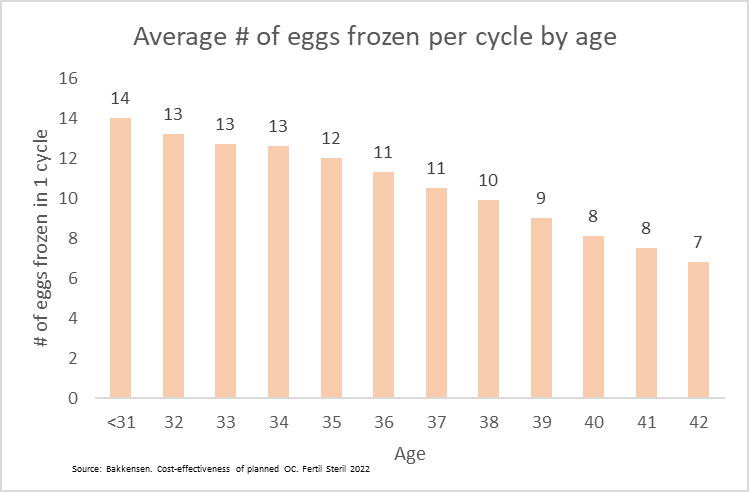
    Below is the average number of eggs frozen depending on your age: