Blog Topic: Clinics

  • Understanding IUI Cost, Success Rate and IUI process

    Understanding IUI Cost, Success Rate and IUI process


    Blog
    Clinics

    Understanding IUI Cost, Success Rate and IUI process

    The cost & success rate of IUI & IVF – consider before you choose. Learn about IUI vs. IVF, the IUI cost & success rates by age, the IUI process, and its timeline.
    Understanding IUI Cost, Success Rate and IUI process

    IUI vs. IVF: Understanding the Basics

    Before we analyze the cost and success rates of IUI, let’s clarify the fundamental differences between IUI and IVF.

    IUI, or Intrauterine Insemination, is a less invasive fertility treatment where sperm is directly placed into a woman’s uterus during her fertile window, increasing the chances of sperm reaching and fertilizing the egg. IVF, on the other hand, stands for In Vitro Fertilization, a more complex and expensive procedure involving the retrieval of eggs from the ovaries, fertilization outside the body, and the transfer of embryos into the uterus.

    IUI Cost: How Much is IUI?

    One of the primary factors couples consider when contemplating fertility treatments is cost. The cost of IUI can vary widely depending on factors such as location, the clinic chosen, and the specific treatment plan. On average, an IUI cycle can range from $2,000 to $7,000 with medication per attempt. However, it’s important to note that this cost may not include additional expenses, such as ultrasounds, and lab tests, which can add to the overall price.

    IVF vs. IUI: A Cost Comparison

    Comparatively, IVF is typically more expensive than IUI. The cost of a single IVF cycle with medication in the United States can range from $6,500 to $40,000. This price tag includes the entire IVF process, from egg retrieval to embryo transfer. Check and compare IVF costs at different clinics near you using our database. Considering the financial aspect alone, IUI is often seen as a more cost-effective option.

    IUI Success Rate by Age

    While cost is a significant consideration, another crucial aspect is the success rate of IUI, which can vary depending on a person’s age and other individual factors.

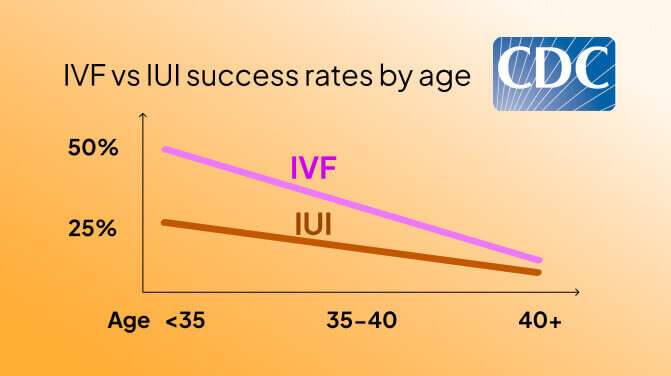
    For women under 35, the success rate for IUI ranges from 8% to 15% per cycle (Belloc, 2018). As women age, the success rate tends to decline, with a decrease of 10-15% for women between 35 and 40 years old and even lower for those over 40. Below, you can find the comparison of IVF and IUI success rates by age.

    It’s essential to consult with a fertility specialist who can provide personalized insights into your specific situation. Find the best fertility doctor near you.

    The IUI Process and Timeline

    Understanding the IUI process and timeline is essential for those considering this fertility treatment. The typical IUI process has the following steps:

    • Day 1 – The start of your cycle 
    • Day 2 or 3 – First appointment and ultrasound 
    • Days 3-7 –  Medication stimulation that will help to produce more eggs and increase chances of fertilization
    • Day 10-13 – Monitoring appointments to check how follicles (future eggs) are growing (usually ultrasound screening).
    • Day 13 – Trigger shot to provoke ovulation
    • Day 14 or 15 – IUI procedure. During the doctor’s visit, the sperm sample is “washed” in the lab to separate active sperm, which then is transfered into the female uterus. The sperm transfer itself takes only 1-2 minutes.  
    • Day 28 – Pregnancy test 

    Keep in mind that this is just a typical timeline, and it could differ depending on your personal circumstances and doctor’s recommendations.

    Conclusion

    In summary, when exploring fertility treatments like IUI, it’s crucial to consider both the financial aspect and the associated success rates. While IUI is generally more affordable than IVF, success rates can vary based on age and individual factors. It’s recommended that couples seeking fertility treatment consult with a fertility doctor. Find the best fertility clinic near you.


  • How much does IUI cost?

    How much does IUI cost?


    Blog
    Clinics

    How much does IUI cost?

    IUI cost: IUI procedure, medication & treatment monitoring costs, and other considerations.

    How much does IUI cost?

    Introduction

    Intrauterine Insemination (IUI) is often a viable and less invasive fertility treatment option for individuals and couples on the journey to parenthood. However, understanding the cost of IUI and what factors contribute to it is crucial in making informed decisions about your fertility journey. 

    What is IUI?

    Before we dive into the cost details, let’s briefly review what IUI entails. Intrauterine Insemination, commonly known as IUI, is a fertility treatment where sperm is placed directly into the uterus during a woman’s ovulation period. This procedure aims to increase the chances of fertilization by bypassing potential barriers the sperm may encounter on its journey to the egg.

    IUI Costs: The Breakdown

    IUI Procedure Cost: 

    The core cost of IUI includes the procedure itself, where a trained healthcare provider places prepared sperm directly into the uterus. The price of this step can vary based on factors such as your location, the medical facility you choose, and whether or not you have insurance coverage for fertility treatments. On average, the basic IUI procedure can range from $1,500 to $3,000 per cycle.

    Fertility Medications:

     In many cases, fertility medications are prescribed to stimulate the ovaries and increase the chances of successful ovulation. The cost of these medications can add up significantly, ranging from $500 to $4,000 per cycle. Whether you require medication and the specific type will depend on your individual circumstances.

    Monitoring and Testing: 

    Before and during the IUI process, you’ll likely need to undergo several tests and monitoring procedures. These may include ultrasounds, blood tests, and sperm analysis. The cost of these tests can vary, but budgeting an additional $500 to $1,000 for monitoring and testing is a prudent estimate.

    Additional IUI Cycles:

    It’s essential to understand that success rates for IUI can vary. Learn more about IUI success rates vs. IVF in our recent blog post. Multiple cycles may be necessary to achieve pregnancy. Each additional IUI cycle will incur its own set of costs, including the basic procedure, medications, and monitoring.

    Overall costs for one IUI procedure may be anything from $2,000 to 7,000 without insurance coverage.

    Insurance Coverage for IUI

    The availability of insurance coverage for IUI varies widely. Some insurance plans may cover a portion of the costs, while others may not cover fertility treatments at all. It’s crucial to check with your insurance provider to understand your coverage and any associated limitations. If your insurance does not cover IUI, you’ll need to budget for the full cost on your own.

    Financial Assistance and Support

    Navigating the cost of IUI can be challenging, but there are resources available to help ease the financial burden. Consider exploring the following options:

    • Fertility Grants and Scholarships: Some organizations offer grants and scholarships to individuals and couples seeking fertility treatment, including IUI. Check here the list of fertility grants that you can apply to.
    • Fertility Financing: Many fertility clinics offer financing options to help you spread the cost of IUI over time. These programs can make fertility treatments more accessible.
    • Employer Benefits: Some employers provide fertility benefits that may cover a portion of your IUI costs. Check with your HR department to see if your company offers such benefits.
    • Tax Deductions: IUI cost can be tax deductible if it is related to infertility. You would need to have all your expenses itemized and proven by receipts. For more details on what expenses are eligible for deduction, consult your tax advisor.

    Conclusion

    The cost of IUI can vary widely, and it’s essential to consider all the factors involved when planning your fertility journey. While the financial aspect can be daunting, remember that there are options for financial assistance and support. Your fertility clinic and insurance provider can provide valuable information to help you make informed decisions about the cost of IUI and your path to parenthood. Book a consultation with a fertility doctor near you.

  • Cost of freezing eggs with insurance

    Cost of freezing eggs with insurance


    Blog
    Clinics

    Cost of freezing eggs with insurance

    Learn about the cost of egg freezing, whether insurance covers egg freezing what can be covered, and different ways to save on egg freezing. Blooming Eve can help you save on each step of the egg freezing process.

    Cost of freezing eggs with insurance

    Egg freezing can significantly increase a young woman’s likelihood of having a biological child in the future. If you’re thinking about getting starting with egg freezing, you might be unsure if the high cost is justified. See how egg freezing might fit into your financial plans by weighing the costs below.

    Overall cost of freezing your eggs

    Without insurance, the average national cost of egg freezing with medication is between $15,000 and $20,000. Bloodwork, ultrasounds, egg retrieval, anesthesia, lab fees for the embryos, and oocyte storage for a year are all included in the overall cost. You will then be required to pay $600-1,000 in annual storage fees. The cycle and drug costs vary significantly depending on which state you live in, the clinic, the medication protocol recommended, and the pharmacy you use. Medication is frequently not included in the clinic’s price list. Your insurance may or may not cover the drug and a portion of the cycle.

    Does insurance cover egg freezing?

    That greatly depends on the type of insurance you or your spouse have, the health benefits provided by your employer, and the clinic you select (in or out of network). Usually, at least a portion of the costs (blood tests, ultrasounds, and some medications) are covered, but you might be fortunate enough to have full coverage.

    How you can save on egg freezing

    There are several unexpected ways that you can save on the cost of freezing your eggs which include doing the following things:

    ●  Call your employee benefits representative or read your health insurance policy. Some health insurance plans partially or completely cover the expenditures associated with infertility, such as prescription drugs or subsequent IVF using frozen eggs.

    ●  Comparison shop, haggle and inquire. Make sure you request an itemized list of what each bundle contains and excludes from the clinics. While some plans and procedures might guarantee a specific number of eggs, others can exclude crucial aspects of your care, like anesthesia or follow-up appointments.

    ●  Compare prices while buying fertility medications. Reproductive medications are pricey. However, a bargain could be discovered. Ask your healthcare team about pharmacies that might provide patients with special rates when you call around to different pharmacies to inquire about their prices.

    Conclusion

    Cost is a big consideration when deciding to freeze your eggs.  Not only is there an upfront cost to get the procedure done, but there are ongoing costs to store your eggs and eventually use them if you decide.  Although the cost can seem large, with more women opting for egg freezing, medical providers and insurance companies are starting to support them with more financial options.

    We at Blooming Eve know how hard it is to find good, easy-to-understand information about egg freezing and its costs. To help solve this issue, we designed a service to help you optimize your costs and get financing if needed. We offer transparent pricing and access to the curated list of clinics and specialists ready to answer your questions and get you started with the process of freezing your eggs.

  • What to expect from the egg freezing process?

    What to expect from the egg freezing process?


    Blog
    Clinics

    What to expect from the egg freezing process?

    You are not alone if your peak reproductive years (20s and early 30s) aren't exactly when you are ready to have kids. Whether it's because they haven't yet met a partner to have a child with, because of professional reasons, or just because they aren't ready to start a family, more and more women are delaying getting pregnant.

    What to expect from the egg freezing process?

    You are not alone if your peak reproductive years (20s and early 30s) aren’t exactly when you are ready to have kids. Whether it’s because they haven’t yet met a partner to have a child with, because of professional reasons, or just because they aren’t ready to start a family, more and more women are delaying getting pregnant.

    Egg freezing may be a desirable alternative for certain people as it provides a form of reproductive insurance against age-related fertility decline. Here’s a thorough explanation of what happens during the egg freezing procedure with us so you can know what to expect.

    The process of freezing your eggs

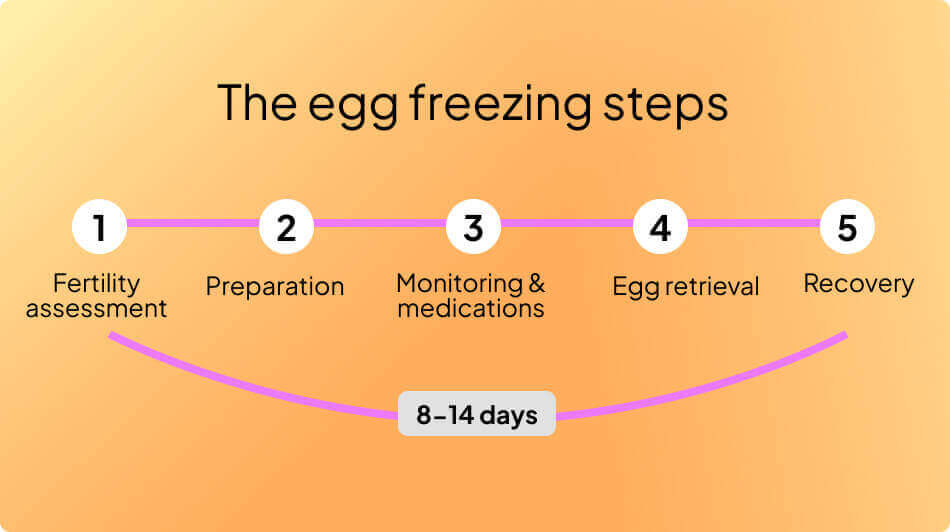
    Fertility testing, which includes blood tests and transvaginal ultrasounds to count visible follicles with the potential to form eggs, is the first step in the procedure. Birth control to control and forecast your cycle and general health modifications may be a part of the preparatory stage. Then, your doctor will prescribe hormone therapy, which entails daily blood injections that you must take for roughly two weeks while also making office appointments every two to three days for blood work and ultrasounds. Following the medical stimulation, your eggs are collected during a quick surgical procedure. The lab checks the extracted eggs over the course of the following 24 hours to identify mature eggs, which are then quickly frozen and kept at -200 C.

    It is advised to follow a healthy diet before egg freezing (high fiber foods, fruits, and vegetables, no processed foods, and little or no sugar), cut back on alcohol, or avoid it altogether. You should stay hydrated, consume protein shakes, and drink electrolyte-enriched beverages like Gatorade after the retrieval to recover more quickly.  Also, high-intensity exercises should be avoided before, during, and after stimulation. The more healthy lifestyle you adopt before the procedure, the easier it will be on your body.

    Is getting your eggs frozen painful?

    After the operation, most people report feeling OK, and severe side effects are quite uncommon. During drug stimulation, some women report feeling lethargic and bloated, while some report feeling extremely emotional during or after the egg freezing procedure. Simply be prepared for it. You can continue to feel bloated for another 7 to 10 days following retrieval, but it will all go away. Your physician keeps an eye on you during and following the surgery to ensure everything is in order.

    The end results

    Our friends and family have talked to Blooming Eve about how difficult it is to locate reliable, understandable information on egg freezing and its price. We have gathered information from various websites and professional sources to compile it into straightforward material so that we can assist women in resolving this problem. We also developed a database including hundreds of clinics and specialists prepared to respond to your inquiries and start the freezing of your eggs for you. Please contact our team to learn more about how we can help today.

    Get access to the best clinics in your area and to the tips on how to decrease your egg freezing costs from Blooming Eve egg freezing specialists. Get a free consultation.

  • Cost of egg freezing & IVF – how to save money on each step

    Cost of egg freezing & IVF – how to save money on each step


    Blog
    Clinics

    Cost of egg freezing & IVF – how to save money on each step

    Cost of IVF & egg freezing are difficult to understand. It can include clinical costs, fertility medication costs, and storage costs. Save the most from choosing the right clinic.

    Cost of egg freezing & IVF - how to save money on each step

    We will talk about the price of the two fertility treatments that are very similar in steps and price: egg freezing and IVF.

    1 – Clinical costs

    Fertility assessment

    It is always the first step. Fertility assessment cost is usually outside of the cycle cost, but your general insurance often covers it. It consists of bloodwork, an ultrasound, and a conversation with your fertility doctor.

    The cycle:
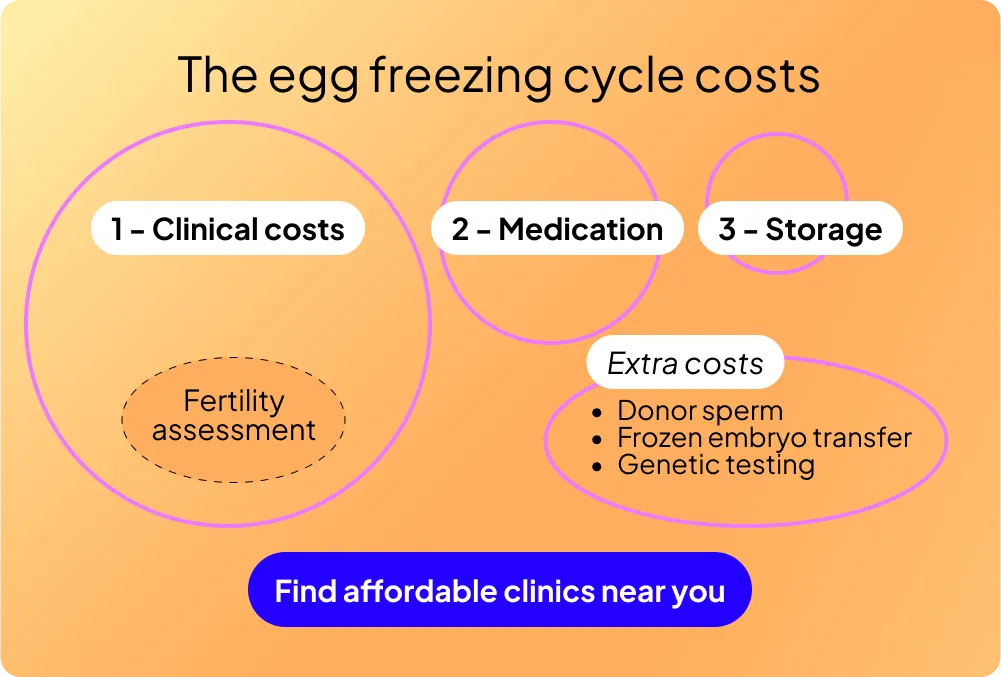
    Egg freezing: $2,500-18,000
    IVF: $3,500-30,000

    The price varies significantly per clinic. Clinics use the term “cycle,” and it means one stimulation of your natural ovulation cycle ending with egg retrieval and freezing of eggs or fertilization and embryo transfer (IVF). Usually, the cycle includes:

    bloodwork and ultrasound (monitoring),
    anesthesia,
    egg retrieval,
    lab fees,
    embryo transfer for IVF (hence IVF is more expensive).

    Sometimes a clinic might charge you separately for some of the steps, like anesthesia, or add extra services to the cost of the cycle, like 1-year storage fees. It is often hard to understand how much exactly the clinic will charge you.

    HACKS TO SAVE $$:

    • Compare the pricing of clinics in your area and in other states/cities. Our database has the most robust info you can find.
    • Call your insurance to see if you have the coverage, general inurancy cover infertility treatment in some States .

    2 – Medication – $3,000 to $10,000

    The price depends on your prescriptions. Your medical protocol will be adjusted on the go depending on how the medication is affecting your body.

    HACKS TO SAVE $$:

    • You can get some of the meds for FREE from our community, where women share their unused extra meds after the procedure.
    • To avoid having extra unused meds, order 50% of the prescribed meds first (will be enough for 4-5 days), then ask your doctor what is the adjusted protocol and order the other 50%. – Saving ~$1k in a cycle.
    • Sometimes you can bill your insurance for medication. To do so, you would need to call your insurance and ask.

    3 – Yearly storage fees – $300 to $1000

    You can keep the eggs at your clinic or transfer them to a more affordable cryobank. To vet a cryobank, we recommend doing your own research, and here is the research we’ve done.

    HACK TO SAVE $$:

    • we have a few trusted partner cryobanks starting at $375 a year (for 5 years of storage). Reply to this email if you want us to connect you with them.

    Add-on extra costs: IVF/embryo freezing

    Some of the clinics may offer additional services and tests when you are going through IVF or embryo freezing. It is up to you if you want or need to do it or not:

    Donor sperm ($500)
    Frozen embryo transfer ($3,000-7,500)
    Genetic testing (~$500-750 per embryo)

    It’s a lot, we know.

    That is exactly why we started Blooming Eve – to make sense of all of this and minimize your fertility expenses. Book your first FREE fertility consultation with our fertility advocate to get your questions answered.

  • Ovarian Reserve Testing: A Guide to Fertility Assessment

    Ovarian Reserve Testing: A Guide to Fertility Assessment


    Blog
    Clinics

    Ovarian Reserve Testing: A Guide to Fertility Assessment

    We will explore ovarian reserve testing, including its importance, available tests, how they work, and where to get them.

    Ovarian Reserve Testing: A Guide to Fertility Assessment

    Introduction

    When it comes to fertility and family planning, understanding your ovarian reserve is a crucial. Ovarian reserve refers to the number of eggs (oocytes) remaining in the ovaries and is used to predict the results of ovarian stimulation for egg freezing or IVF. Ovarian reserve testing is very often one of the first steps in starting fertility treatment: fertility assessment. 

    It is important to understand that while it helps to better forecast the number of eggs retrieved during IVF or egg freezing cycle, it doesn’t assess your reproductive potential and quality of your eggs.

    What is Ovarian Reserve Testing?

    Usually, ovarian reserve testing is based on biochemical analysis (blood test) and ultrasound. The most common blood test includes measuring the following hormones: FSH, AMH, and estradiol. 

    AMH (anti-mulleran hormone): is produced by small ovarian follicles and as the number of follicles declines over time, AMH serves as a simple and direct measure of the number of remaining eggs. AMH levels can be tested at any time during the cycle. Higher AMH may mean that you would need a lower dosage of hormones during fertility treatment and better harvesting of eggs with the procedure.

    FSH (Follicle-Stimulating Hormone): The hormone that helps stimulate the growth of the eggs in ovaries and is produced by a pea-sized body attached to your brain – the pituitary gland. FSH levels vary throughout your cycle and are highest in the beginning (that’s when it’s usually checked, but it also depends on your doctor’s preference). 

    Estradiol is usually measured on the same day as FSH and can help with additional interpretation of FSH (whether FSH is accurate or not).

    AFC (Antral Follicle count)

    This test uses transvaginal ultrasound to count the number of follicles in the ovaries, which can give an estimate of ovarian reserve. 

    Why is Ovarian Reserve Testing Important?

    Ovarian reserve testing should be used in the context of your age and together with other diagnoses. It helps to set expectations and choose between different treatment options.

    Where to Get Ovarian Reserve Testing

    If you’re considering fertility assessment for egg freezing or IVF, you can start by consulting with a reproductive endocrinologist or a fertility specialist. They can recommend the most appropriate tests for your situation and guide you through the process. You can find fertility clinics and specialists near you throughout our database of all fertility clinics in the US.

    Even though there are a number of commercial at-home fertility tests that are used to measure AMH, they vary a lot in accuracy and methodology. That’s why it is recommended to do ovarian reserve testing at the fertility clinic, where a properly trained fertility specialist will analyze it together with other parameters, such as age and diagnosis.

    Cost of Ovarian Reserve Testing

    The cost of ovarian reserve testing can vary widely depending on the type of test, your location, and whether you have insurance coverage. It is often covered by insurance, and It’s essential to check with your healthcare provider or fertility clinic to understand the costs involved.

    Conclusion

    Ovarian reserve testing is a common procedure performed during initial fertility evaluation. It helps to guide your treatment, estimate your response to ovarian stimulation for IVF and egg freezing, and select between different treatment options. For egg freezing, it helps to build expectations on the results of the egg retrieval and plan your treatment according to your family goals and budget. If you are ready to start your fertility assessment, book a consultation with a fertility clinic near you.

  • IVF medications

    IVF medications


    Blog
    Clinics

    IVF medications

    IVF medications explained: most types of medication, side effects, and more

    IVF medications

    Introduction

    In vitro fertilization (IVF) is a medical marvel that has helped countless couples and individuals achieve their dream of parenthood. IVF involves a complex series of procedures, and one crucial aspect of this journey is IVF medications. Among these medications, IVF injections and shots play a vital role in stimulating the ovaries, maturing eggs, and increasing the chances of a successful pregnancy. In this blog, we’ll delve into the world of IVF medications, with a particular focus on IVF injections and shots.

    Understanding IVF Medications

    IVF medications are an integral part of the IVF process. They are designed to manipulate the body’s natural hormone levels to optimize the chances of fertilization and a healthy pregnancy. These medications are typically administered in the form of injections, which are carefully calibrated to suit the individual’s needs and the stage of the IVF cycle.

    Types of IVF medication

    Gonadotropins

    The role of this medication is to promote the simultaneous growth of multiple follicles.

    They come in two main kinds:

    • FSH is represented by such brands as Follistim and Gonal-F. That is the same medication but produced by different manufacturers.
    • HMG – brand Menopur

    GnRH Antagonists

    The main purpose of this medication is to prevent pre-mature ovulation by suppressing the release of the luteinizing hormone LH. It comes in 2 alternative brands: Cetrotide and Ganirelix Acetate. 

    Patients usually start taking this medication later during days 7-9 of the cycle and continue taking it till the end of the stimulation.

    GnRn Agonist

    This medication is used to suppress your natural LH and FSH production, making the stimulation more controlled and the production of mature oocytes more synchronized.

    GnRn Agonist is represented by the brand Lupron (Leuprolide Acetate).

    Ovulation trigger

    This is an injectible medication of human chorionic gonadotropin used to complete oocyte maturation by mimicking the natural surge of LH hormone.

    The most popular brands are Ovidrel, Novarel, and Pregnyl. The trigger should be administered at a specific time, and it is usually scheduled 34-36 hours before egg retrieval.

    Your specific medication protocol and dosage should be prescribed by your physician based on your individual circumstances. It can also be adjusted during your stimulation depending on how you react to medication.

    IVF Injections: side effects

    The possible side effects of IVF medications include bloating, headache, pain at the injection area, nausea, vaginal bleeding, mood swings, and OHSS (ovarian hyperstimulation syndrome). OHSS happens in less than 1% of stimulation cycles, and doctors monitor your reaction closely to make sure you don’t get OHSS. 

    As a part of the process, you self-administer medication injections, but most women tolerate it very well. If you are afraid of shots, we can help you find a nurse to help you with medication. 

    Learn more about our fertility support.

    The Emotional Aspect of IVF Medications

    The IVF journey can be emotionally taxing, and the daily routine of injections and shots can add another layer of stress. It’s crucial for patients and their support systems to acknowledge and address the emotional challenges that come with IVF medications. 

    Conclusion

    IVF medications, including IVF injections and shots, are essential tools in the journey toward achieving a successful pregnancy through in vitro fertilization. While the process may seem daunting, it’s important to remember that these medications are carefully tailored to optimize your chances of success. If you’re considering or undergoing IVF, book an appointment with the best fertility clinic near you.
  • Embryo Freezing: A Comprehensive Guide

    Embryo Freezing: A Comprehensive Guide


    Blog
    Clinics

    Embryo Freezing: A Comprehensive Guide

    Learn about the embryo freezing process, embryo vs. egg freezing for how long embryos can be frozen, and other considerations.

    Embryo Freezing: A Comprehensive Guide

    Introduction

    In the world of reproductive technology, advancements have made it possible for individuals and couples to preserve their fertility for future family planning. One of the remarkable innovations in this field is embryo freezing, also known as embryo cryopreservation. In this blog, we’ll dive into the intriguing world of frozen embryos, exploring the process, advantages, and essential considerations.

    What is an Embryo Freezing?

    Embryo freezing is a fertility preservation method where embryos are created in the lab from eggs retrieved and fast-frozen at a very low temperature through a process known as vitrification. This technique allows for the storage of embryos for an extended period until they are ready to be used in assisted reproductive procedures like in vitro fertilization (IVF).

    Embryo Freezing Process

    The embryo freezing process involves several crucial steps:

    • Ovarian stimulation: during this stage, you are taking fertility medications (hormonal injections) to stimulate the growth of multiple follicles that can be further retrieved and fertilized. You should expect to go to the fertility clinic every few days for monitoring appointments (blood work and ultrasound).
    • Egg retrieval: When the follicles reach the appropriate size, you take a trigger shot approximately 35-36 hours before your retrieval to promote ovulation. The retrieval itself is a simple 20-30-minute procedure done under anesthesia when the fluid containing follicles is collected from the ovaries.
    • Embryo fertilization and culture: The follicles retrieved are inspected in the embryo lab to select mature eggs. Then, mature eggs are combined with the prepared sperm sample in a laboratory dish to create embryos through either standard IVF or intracytoplasmic sperm injection (ICSI). The resulting embryos are grown in a controlled environment for a few days to ensure they are healthy and developing properly.
    • Cryopreservation: Healthy embryos are then fast frozen using the vitrification technology and stored in liquid nitrogen at temperatures as low as -196°C (-321°F). 

    How Long Can Embryos Be Frozen?

    One of the most common questions about frozen embryos is how long they can be stored while remaining viable. The answer depends on various factors, including the quality of the embryos and the storage conditions. Generally, embryos can be frozen for an extended period, often several years, without a significant decrease in their viability. Based on existing research, the time you keep your embryos frozen doesn’t affect the results of your future IVF.

    Frozen Embryos vs. Frozen Eggs: Which is Better?

    • Embryo Freezing: This is a great option for couples who are planning to have kids together in the near future or later in life. The main benefit of embryo freezing is the amount of data that you have. While with egg freezing, it’s hard to predict how many eggs will fertilize and end up as healthy embryos, with embryo freezing, you know exactly how many embryos you have that can also be tested for any genetic diseases or abnormalities.

    Frozen embryos also have a little higher thawing survival rate of around 85%-95%, whereas frozen eggs have 80-90%.

    • Egg Freezing: This is a viable choice for those who wish to preserve their fertility but do not have a partner or are not ready yet to start a family with their current partner. It provides more flexibility but has less certainty than embryo freezing. While it is not a guarantee, current studies show promising results that with at least 20 eggs frozen before the age of 38, you can reach up to 70% probability of live birth. 

    Ultimately, the choice between freezing eggs or embryos depends on individual circumstances and future family planning goals. If you are ready to 

    How Many Embryos Should I Freeze?

    The number of embryos you should freeze depends on your specific situation and family plans. You should discuss it with your fertility specialist, who would be able to give you more specific guidance based on your individual situation. Typically, having a surplus of high-quality embryos is reassuring, but the exact number will vary from person to person.

    Success Rates of Embryo Freezing

    The success rate of embryo freezing largely depends on the quality of the embryos and the expertise of the fertility clinic. Generally, the success rates for using frozen embryos in IVF procedures are promising, with many resulting in successful pregnancies and healthy births. Check how the success rates of different clinics compare to the national level.

    Conclusion

    Embryo freezing, or cryopreservation, has revolutionized the field of reproductive medicine. It provides individuals and couples with the opportunity to preserve their fertility and plan for future family-building endeavors. Whether you choose to freeze embryos or eggs, it’s essential to consult with a fertility specialist to make informed decisions about your reproductive journey. Book a first consultation with a fertility doctor.

  • Understanding IVF success rates

    Understanding IVF success rates


    Blog
    Clinics

    Understanding IVF success rates

    Explore what is IVF success rate, IVF success rates by age, and where to find IVF success rates by clinic.

    Understanding IVF success rates

    Introduction

    In recent years, In Vitro Fertilization (IVF) has become an increasingly common solution for couples struggling with infertility. IVF offers hope to those who dream of starting or expanding their families, but understanding the factors that influence IVF success rates is essential for making informed decisions. One of the most significant factors affecting IVF outcomes is the age of the woman undergoing treatment. In this blog post, we will explore IVF success rates by age, the definition of success rate for IVF, and more.

    What is the success rate for IVF, and which ratio to use?

    The term success rate is commonly used in the medical literature advertised on the websites of fertility clinics, but it may mean different things depending on how it is measured. 

    The Centers for Disease Control and Prevention (CDC) and the Society for Reproductive Medicine (SART) both publish information on the success rates of fertility clinics. The data has slight discrepancies due to different numbers of clinics reported to the agency and differences in reporting deadlines and methods used. Due to the need to collect the data on subsequent transfers and birth (~2 years) and then perform the check of the submitted information, the agencies usually release the data after 2-3 years.

    Only 79% of clinics included in the CDC report are SART members; that’s why we prefer using CDC data that has a larger pool of information that they also perform an extensive check on.

    What is the correct IVF success rate to use?

    To estimate the chances of getting pregnant from IVF at a certain age, you should use “success rates for patients’ own eggs.”

    For the success factor, you have options, but “live-birth from intended egg retrievals” shows you how many started IVF cycles resulted in a live birth and it includes cumulative information on all transfers that takes places within 1 year after retrieval. That is important to understand because the cycle can be canceled before retrieval; not all of the eggs retrieved can be mature and fertilized, and not all of them will result in successful transfer and birth. This ratio gives you the full picture from start to finish. 

    Unfortunately, agencies do not let you easily compare clinics to between each other and the national level, but you can do that easily with our database and also check information on pricing and reviews of different fertility centers.

    IVF Success Rates by Age

    IVF success rates can vary significantly based on the age of the woman undergoing treatment. Below, you can find the IVF success rates by age as recently reported by the CDC at a national level:

          Under 35: Women under the age of 35 typically have the highest IVF success rates. The average live birth rate for women in this age group is around 51.1% per IVF cycle.

    • 35-37: IVF success rates start to decline slightly in the late 30s, with an average success rate of 37.1% per cycle.
    • 38-40: In this age range, IVF success rates decrease further to around 23.7% per cycle.
    • Over 40: For women over 40, the chances of success drop significantly, with average success rates of 7.6% per cycle.

    It’s essential to keep in mind that these are approximate figures, and individual outcomes may vary based on various factors, including overall health, underlying conditions, and the specific IVF protocol used.

    IVF Success Rates by Clinic

    Another crucial factor in IVF success is the choice of a fertility clinic. IVF success rates can vary from one clinic to another due to differences in treatment protocols, expertise of the medical team, and patient population. To make an informed decision, research and compare the success rates of clinics in your area

    Keep in mind that while high success rates are appealing, other factors, such as the clinic’s approach to patient care and support, should also be considered. You can get a sense of the level of care by reading reviews from other patients. In our platform, we made it easy to evaluate success rates, reviews, and prices.

    Conclusion

    IVF success rates by age provide a general overview of what to expect during fertility treatment, but every journey is unique. Remember that you are not alone in this journey, and there is a supportive community of individuals and professionals ready to assist you in your pursuit of a family. If you need help choosing a fertility center or support throughout your fertility journey, our fertility advisors would be happy to help you.

  • The egg retrieval procedure

    The egg retrieval procedure


    Blog
    Clinics

    The egg retrieval procedure

    The egg retrieval is a step in IVF, egg freezing, and embryo freezing. It may have mild side effects, but most individuals recover within a few days.

    The egg retrieval procedure

    The egg retrieval procedure is a critical step in in vitro fertilization (IVF), egg freezing, or embryo freezing. Here’s an overview of the procedure:

    Purpose

      – IVF: To retrieve mature eggs from a woman’s ovaries for fertilization in a lab.

      – Egg Freezing: To collect and freeze a woman’s eggs for future use.

      – Embryo Freezing: To harvest eggs, fertilize them, and freeze resulting embryos for later use.

    Egg retrieval procedure

      – Typically performed within 15 minutes under light anesthesia or sedation.

      – A thin, hollow needle is inserted through the vaginal wall into the ovaries.

      – The needle is guided by ultrasound imaging to aspirate mature eggs from follicles.

      – Collected eggs are then immediately transferred to a laboratory for further processing.

    Side effects of egg retrieval

      – Common side effects include mild discomfort, bloating, and cramping.

      – Rarely, there can be infection, bleeding, or damage to nearby organs, but these are very uncommon.

    Recovery

      – Most women can resume normal activities within 24 to 48 hours.

      – Mild discomfort and bloating may persist for a few days.

      – Strictly follow your doctor’s post-retrieval instructions.

    After egg retrieval

      – IVF: After retrieval, eggs are fertilized with sperm, and embryos develop over several days. Some embryos can be frozen if not used in the first implantation.

      – Egg Freezing: Eggs are frozen and stored for future use indefinitely.

      – Embryo Freezing: Embryos are frozen and stored, ready for transfer in a future IVF cycle.

    Egg or embryo storage can be a big additional cost. We’ve done the research and found a reliable egg/embryo storage facility for $375 a year (on a 5-year plan). Reach out if you want to save money at a reliable cryobank.

    In summary, the egg retrieval procedure is a pivotal step in assisted reproductive technologies like IVF, egg freezing, and embryo freezing. While it may have mild side effects, most individuals recover within a few days, and the timeline varies depending on the specific purpose of the procedure. If you want to get a full scoop of our fertility support, book a consultation. Or find an affordable fertility clinic for a consultation or second opinion.