
Understanding Male Fertility Testing
Learn about male fertility: how to test male fertility, indication and considerations, and at-home male fertility tests.
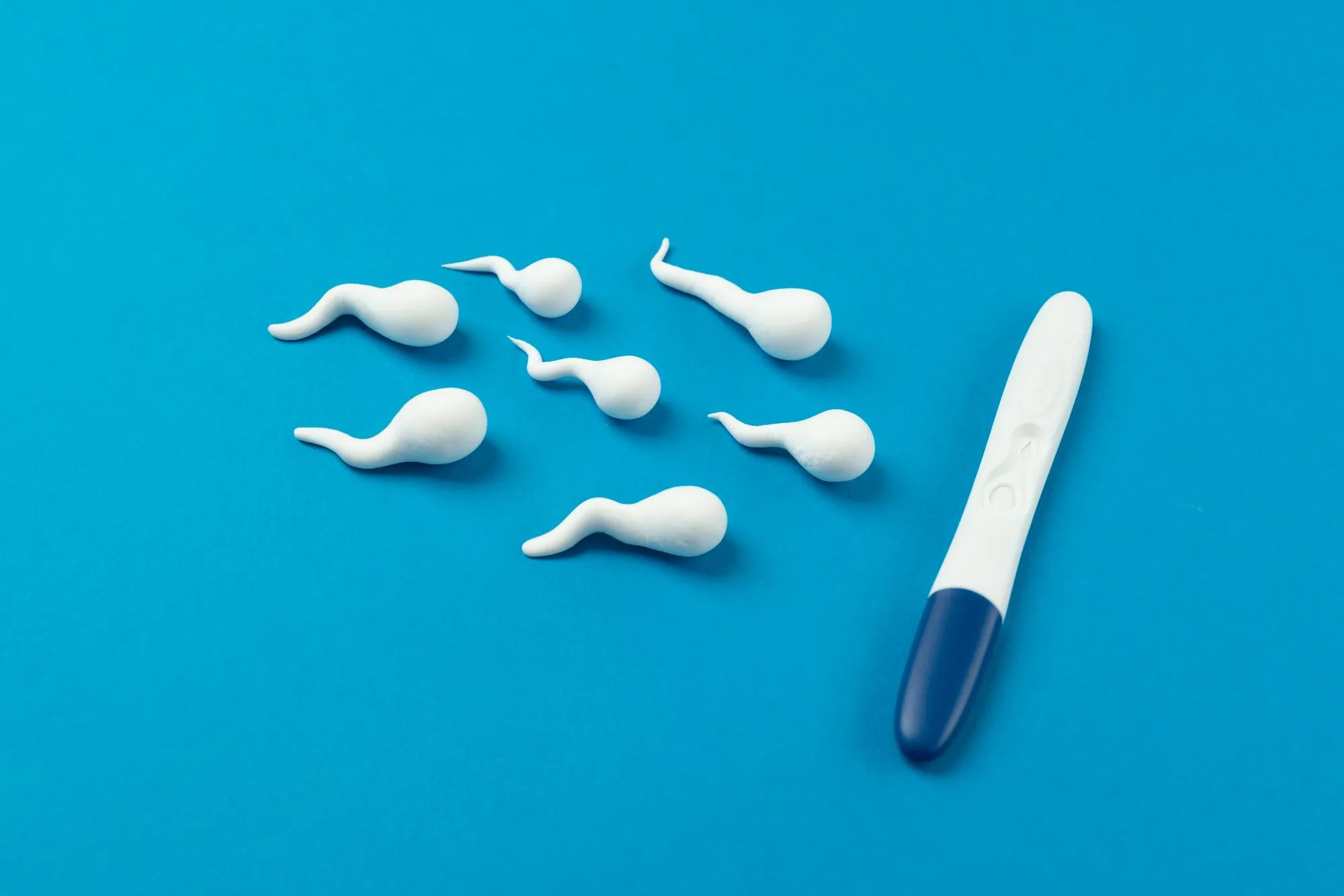
Men’s fertility testing is very important for couples facing conception difficulties, attributing to 40-50% of infertility cases. Additionally, about 20% of infertility cases are for reasons solely related to male fertility, as per the American Society for Reproductive Medicine. Early identification of fertility problems allows prompt intervention and accurate diagnosis. Common male fertility issues involve:
- inadequate sperm production
- abnormal sperm morphology (shape) or motility (movement)
- reproductive tract blockages hindering sperm release
How to Test Male Fertility: Essential Steps for Men’s Fertility Testing
Following a year of trying to conceive without success (or six months for female partners over 35), both partners should undergo fertility evaluations. Additionally, According to the American Urological Association, in couples with failed ART (assisted reproductive technologies) cycles or recurrent pregnancy losses (RPL) (two or more losses), evaluation of the male should be considered.
For men, fertility testing may include:
- Health History: Detailed exploration of medical, family, and fertility history.
- Physical Exam: Thorough diagnostic examination.
- Blood Test: Assessment of reproductive hormone levels to identify potential imbalances affecting fertility.
- Lab-Based Semen Analysis: Crucial for assessing sperm count, volume, shape, and motility.
- Scrotal ultrasound imaging that can test for testicular obstruction.
- Genetic testing- to confirm potential genetic issues with sperm concentration.
- Testicular biopsy-piece of tissue from the testicle removed and examined under a microscope.
Considerations Prompting Early Male Fertility Testing
Specific conditions or medical histories may necessitate earlier fertility testing for men, such as:
- Testicular damage
- Erectile dysfunction
- Previous cancer treatments
- Prior infections (mumps, genital infections)
- Testicular injuries or torsion
- Exposure to high temperatures
- Previous surgeries (urinary tract, hernia repair)
- Early or late puberty
At-Home Male Fertility Test
Several products available online and at pharmacies offer at-home testing of semen samples, providing convenience and affordability. These tests primarily examine sperm motility and concentration. Several FDA-cleared examples include:
- Spermcheck fertility (sperm concentration; 98% accuracy)
- Trak Male Fertility Testing system (sperm volume & concentration; 82-95.5% accuracy)
- SwimCount Sperm Quality test (sperm motility and concentration; 95% accuracy)
- Smartphone-based at-home semen analysis: YO sperm clip (sperm motility; 98.3% accuracy with Iphone 7; 97.2% with Galaxy S2)
However, at-home tests may not assess sperm size and shape comprehensively and might miss certain infertility factors. Lab-based semen analysis remains the gold standard for accurate fertility assessment. Consult a medical provider for comprehensive fertility testing.
References:
1. Kumar N, Singh AK. Trends of male factor infertility, an important cause of infertility: A review of literature. J Hum Reprod Sci. 2015;8(4):191-196. doi:10.4103/0974-1208.170370
2. Chandra, A., Copen, C.E., & Stephen, E.H. (2013). Infertility and Impaired Fecundity in the United States, 1982-2010: Data From the National Survey of Family Growth. National Health Statistics Reports, 67, 1-19. Retrieved December 29, 2023 from https://www.cdc.gov/nchs/data/nhsr/nhsr067.pdf (PDF 328 KB)
3. The American Society for Reproductive Medicine (ASRM) 2015. Male Infertility Evaluation: What do I need to know? Retrieved December 2023 from : https://www.reproductivefacts.org/globalassets/_rf/news-and-publications/bookletsfact-sheets/english-pdf/male_infertility_evaluation_what_do_i_need_to_know_factsheet.pdf
4. John Hopkins Medicine Health. Male Infertility. Retrieved December 2023 from: https://www.hopkinsmedicine.org/health/conditions-and-diseases/male-infertility
5. Schlegel PN, Sigman M, Collura B, De Jonge CJ, Eisenberg ML, Lamb DJ, Mulhall JP, Niederberger C, Sandlow JI, Sokol RZ, Spandorfer SD, Tanrikut C, Treadwell JR, Oristaglio JT, Zini A. Diagnosis and Treatment of Infertility in Men: AUA/ASRM Guideline Part I. J Urol. 2021 Jan;205(1):36-43. doi: 10.1097/JU.0000000000001521. Epub 2020 Dec 9. PMID: 33295257.
6. Gonzalez D, Narasimman M, Best JC, Ory J, Ramasamy R. Clinical Update on Home Testing for Male Fertility. World J Mens Health. 2021;39(4):615-625. doi:10.5534/wjmh.200130